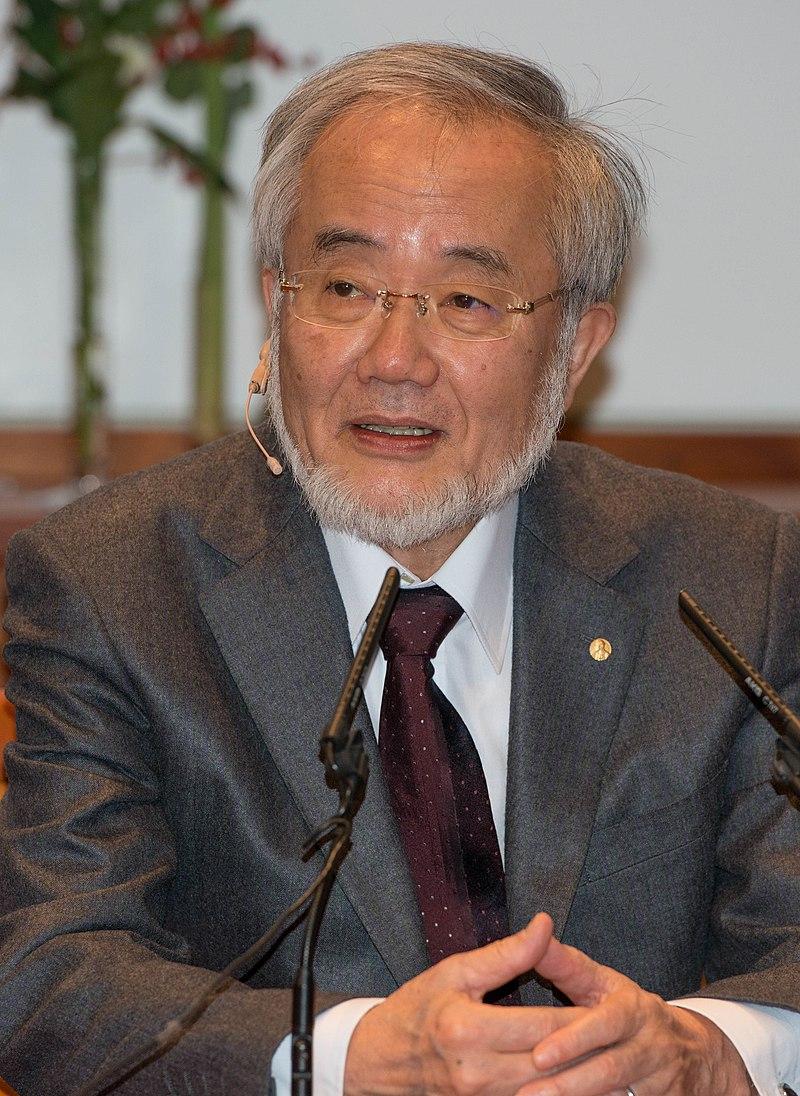
Nobel laureate Yoshinori Ohsumi revolutionized understanding of autophagy's role in health and disease.
Sweden
Science
Medicine
4 min read
Updated By: History Editorial Network (HEN)
Published:
Updated:
Yoshinori Ohsumi, a cell biologist from Japan, was recognized with the Nobel Prize in Physiology or Medicine for his contributions to the understanding of autophagy, a fundamental process in cell biology. Autophagy, derived from Greek meaning 'self-eating,' is the mechanism by which cells degrade and recycle their own components. Ohsumi's research elucidated the genetic and molecular pathways that control autophagy, enabling the identification of 15 key genes essential for this process.
Ohsumi conducted his pioneering work using yeast cells as a model organism. By inducing mutations and creating a system to observe the accumulation of autophagic bodies, he was able to demonstrate the step-by-step process of autophagy, which was previously unclear. His discoveries revealed how cells adapt to starvation and stress by breaking down non-essential components and proteins, repurposing them for new cellular functions.
The implications of Ohsumi's work extend beyond basic biology to medicine. Autophagy is crucial for cellular maintenance, and dysfunctions in this process are linked to a range of diseases, including cancer, neurodegenerative disorders like Alzheimer's and Parkinson's disease, and infections. By understanding autophagy, researchers can develop new therapeutic strategies targeting these diseases.
Yoshinori Ohsumi's discoveries advanced the scientific community's understanding of cellular behavior and opened new avenues for research in health and disease treatment. His work emphasized the importance of fundamental research in uncovering the underlying mechanisms of life.
#NobelPrize #Autophagy #CellBiology #MedicalResearch #YoshinoriOhsumi #MoofLife
Explore the Life Moments of
 AI Twin