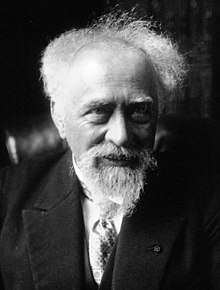
Scientific Contributions of Jean Baptiste Perrin: Advancing Understanding of Matter and Atoms
Sweden
Science
Technology
4 min read
Updated By: History Editorial Network (HEN)
Published:
Jean Baptiste Perrin was awarded the Nobel Prize in Physics for his work investigating the structure of matter and the discovery of sedimentation equilibrium. Perrin's studies significantly advanced the understanding of the molecular nature of matter. His meticulous experiments provided empirical confirmation of the atomic theory, which was instrumental at a time when the existence of atoms was still debated among scientists.
One of his key contributions involved the examination of Brownian motion, which is the random movement of particles in a fluid. By analyzing the sedimentation of particles and their equilibrium distribution, Perrin was able to demonstrate the consistency of this phenomenon with the predictions of Einstein's theory. Perrin's work offered quantitative validation, showing that the observed distribution of particles followed the expected laws of thermodynamics and statistical mechanics.
Perrin's findings had substantial implications for various scientific fields, including chemistry, physics, and biology. By establishing a method to observe and measure the behavior of molecules, he provided a crucial link between theoretical physics and experimental evidence. This connection reinforced the atomistic view of matter, influencing future research and technological development.
His award reflected the broader acceptance of atomic theory within the scientific community. Perrin's dedication to rigorous experimental methods and his ability to derive significant theoretical insights from practical observations underscored the evolving nature of scientific inquiry during that era.
#PhysicsResearch #AtomicTheory #SedimentationEquilibrium #NobelPrize
Primary Reference
Jean Baptiste Perrin – Nobel Lecture - NobelPrize.org
Explore the Life Moments of
 AI Twin