Revolutionary Contributions of Schrödinger and Dirac in Atomic Theory and Quantum Mechanics
Sweden
Science
Physics
4 min read
Updated By: History Editorial Network (HEN)
Published:
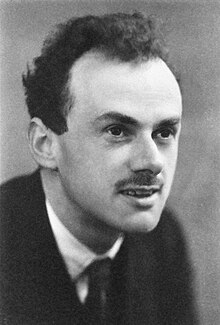
Erwin Schrödinger and Paul A.M. Dirac were recognized for their revolutionary contributions to atomic theory, receiving the Nobel Prize in Physics. Schrödinger was honored for the development of wave mechanics, a fundamental theory describing the behavior of particles at the atomic level through wave equations. His Schrödinger equation became a cornerstone of quantum mechanics, providing a new way to understand the dynamics of subatomic particles.
Dirac was recognized for his significant work in the formulation of quantum mechanics and his contribution to the theory of quantum electrodynamics. Dirac's equation describes the behavior of fermions and predicted the existence of antimatter, which was subsequently confirmed by experimental discovery. This equation marries quantum mechanics with special relativity, allowing for a more comprehensive understanding of particle interactions.
These advancements fundamentally altered the landscape of theoretical physics. Schrödinger's and Dirac's contributions provided critical frameworks that scientists continue to build upon, deepening our understanding of the quantum world. Their work significantly influenced future studies in both theoretical and applied physics, strengthening the bridge between theory and experimentation.
Their recognition underscores the importance of theoretical foundations in the advancement of scientific knowledge. Both scientists profoundly impacted the study of atomic and subatomic particles, revolutionizing our approach to quantum mechanics and its applications.
#NobelPrize #QuantumMechanics #Physics #ScientificDiscovery #WaveMechanics #QuantumElectrodynamics #Schrödinger #Dirac #ScienceHistory #MoofLife
Primary Reference
Erwin Schrödinger - Wikipedia
Explore the Life Moments of
 AI Twin