
Pioneering Discovery of Binary Pulsar and Gravitational Waves Significantly Advances Astrophysics
Sweden
Science
Astronomy
4 min read
Updated By: History Editorial Network (HEN)
Published:
Russell A. Hulse and Joseph H. Taylor Jr. were honored for their discovery of a new type of pulsar, which significantly advanced the study of gravitational waves. Their collaboration led to the identification of the first binary pulsar, named PSR B1913+16, while they were conducting research at the Arecibo Observatory.
The pulsar, a rapidly spinning neutron star emitting regular radio pulses, was notable for its association with another neutron star in a close orbit. This system allowed for precise tests of Einstein's general theory of relativity. By monitoring the timing of the pulsar's radio pulses, Hulse and Taylor were able to observe the orbital decay of the system, which matched predictions derived from the emission of gravitational waves—ripples in spacetime first predicted by Einstein.
Their findings provided the first indirect evidence for the existence of gravitational waves, which later became a cornerstone for further astrophysical research. The discovery also paved the way for the development of more sensitive detectors aimed at directly observing these waves, such as the Laser Interferometer Gravitational-Wave Observatory (LIGO).
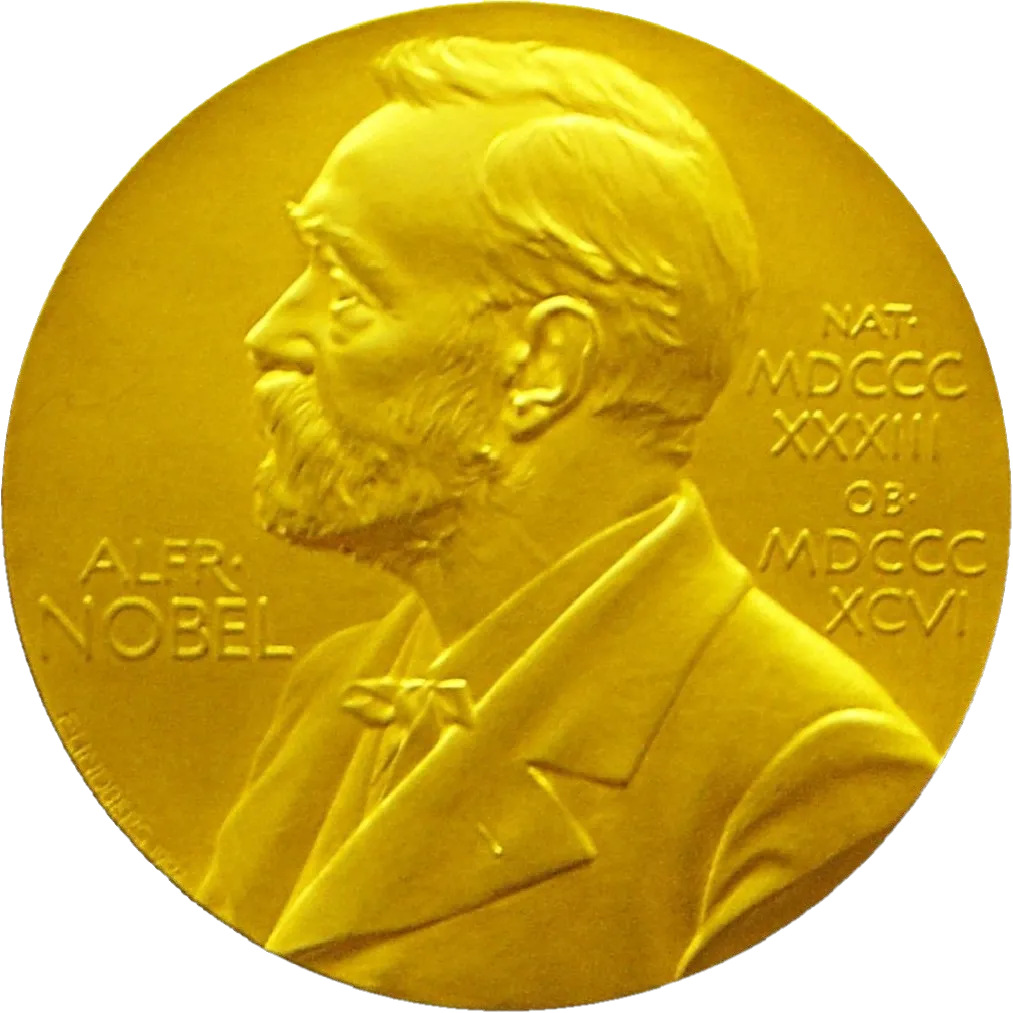
The recognition of Hulse and Taylor's work by the Nobel Committee underscored the broader scientific impact of their discovery. It not only tested the limits of one of physics' fundamental theories but also opened up new avenues for understanding astrophysical phenomena and the fabric of the universe.
#NobelPrize #Physics #GravitationalWaves #Pulsars #Astrophysics #ScientificDiscovery #MoofLife
Primary Reference
News | Gravitational Waves Detected 100 Years After Einstein's ...
Explore the Life Moments of
 AI Twin