Physicists' pioneering work in deep inelastic scattering validates quark model, advances particle physics understanding.
Sweden
Science
4 min read
Updated By: History Editorial Network (HEN)
Published:
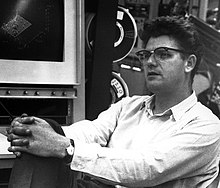
Physicists Jerome I. Friedman, Henry W. Kendall, and Richard E. Taylor were recognized for their pioneering experimental work in the field of deep inelastic scattering of electrons on protons and bound neutrons. Their research provided compelling evidence for the existence of quarks, fundamental constituents of protons and neutrons, significantly advancing the understanding of particle physics.
Through experiments conducted at the Stanford Linear Accelerator Center (SLAC), they observed that the electron-proton collisions revealed a smaller, point-like structure within the protons, consistent with the quark model proposed by theorists. Their findings contributed to the formulation of the Standard Model of particle physics, a theory that describes the electromagnetic, weak, and strong nuclear interactions.
The experiments involved accelerating electrons to high energies and then directing them at proton targets. By measuring the scattering angles and energies of the electrons after collisions, they obtained data supporting the hypothesis that protons are not indivisible but are composed of smaller particles, or quarks.
This breakthrough had wide-reaching implications, facilitating further research in particle physics and leading to the identification and understanding of various fundamental particles. The work demonstrated the value of experimental investigations in proving theoretical models and added critical experimental validation to the quark model.
These achievements significantly influenced the direction of subsequent research in high-energy particle physics, opening new avenues for exploring the subatomic world and the fundamental forces of nature.
#Physics #NobelPrize #ParticlePhysics #QuarkModel #ScientificDiscovery #ExperimentalPhysics #MoofLife
Primary Reference
Henry Way Kendall - Wikipedia
Explore the Life Moments of
 AI Twin