Nobel Prize-winning work on Cherenkov effect: revolutionizing physics and technology.
Sweden
Science
Technology
4 min read
Updated By: History Editorial Network (HEN)
Published:
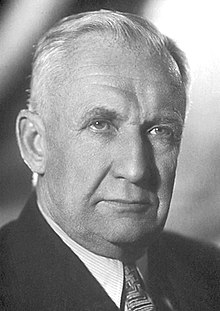
Pavel A. Cherenkov, Il´ja M. Frank, and Igor Y. Tamm were recognized with the Nobel Prize in Physics for their pivotal work on the Cherenkov effect. This phenomenon occurs when charged particles, such as electrons, travel through a dielectric medium at speeds exceeding the phase velocity of light in that medium. This results in the production of a noticeable blue light, known as Cherenkov radiation.
Their journey to this achievement began when Cherenkov first observed the bluish glow in a bottle of water under radioactive bombardment. Frank and Tamm contributed by providing the theoretical framework that explained Cherenkov's experimental findings. They demonstrated that the effect results from the emission of electromagnetic waves as charged particles move faster than light can travel through the medium, analogous to the sonic boom produced by objects exceeding the speed of sound.
This discovery had profound implications for both theoretical and applied physics. It advanced the understanding of particle physics and the interaction of radiation with matter. In practice, it has enabled the development of Cherenkov detectors, which are instrumental in identifying high-energy particles in particle accelerators and nuclear reactors. This technology plays a crucial role in fields such as astrophysics, medical imaging, and nuclear research.
Their work collectively enhanced the scientific comprehension of relativistic speeds and bolstered further research in high-energy physics. Cherenkov's initial observations, supported by Frank and Tamm's theoretical elucidation, underscore a vital collaboration in the scientific community's pursuit of knowledge.
#Physics #NobelPrize #CherenkovEffect #ScientificDiscovery #MoofLife
Primary Reference
High energy neutrinos from the cosmos - NobelPrize.org
Explore the Life Moments of
 AI Twin