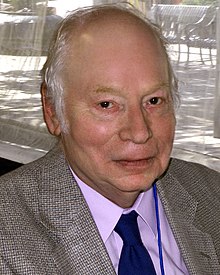
Nobel Prize for Electroweak Theory: Unifying Forces in Physics
Sweden
Science
4 min read
Updated By: History Editorial Network (HEN)
Published:
Sheldon Glashow, Abdus Salam, and Steven Weinberg were honored with the Nobel Prize in Physics for their groundbreaking work on the theory of unified weak and electromagnetic interaction. This achievement was recognized for advancing the understanding of fundamental forces in nature.
Their collaborative efforts led to significant progress in the development of the electroweak theory, which successfully merged electromagnetism and the weak nuclear force into a single theoretical framework. This unification was a crucial step in the development of the Standard Model of particle physics, which describes the fundamental particles and their interactions.
The electroweak theory predicted the existence of the W and Z bosons, particles that mediate the weak force, and suggested that at high energy levels, the electromagnetic and weak forces would become indistinguishable. These predictions were later confirmed through experiments at CERN, further validating their theoretical framework.
This work had a profound impact on the field of physics, leading to a deeper understanding of the universe's fundamental structure and paving the way for future research in particle physics. It also demonstrated the power of theoretical physics in predicting phenomena that experimental physics could later confirm.
Their contributions have been instrumental in shaping modern physics, influencing subsequent generations of physicists and researchers. The recognition by the Nobel Committee underscored the significance of their work in the scientific community and highlighted the collaborative nature of groundbreaking scientific discoveries.
#NobelPrize #Physics #ElectroweakTheory #StandardModel #ParticlePhysics #MoofLife
Primary Reference
Steven Weinberg – Facts - NobelPrize.org
Explore the Life Moments of
 AI Twin