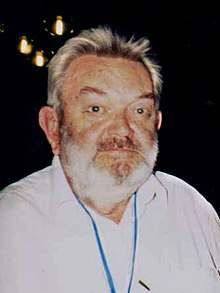
Nobel laureates in Physics for work on electroweak interactions and Standard Model advancements.
Sweden
Science
4 min read
Updated By: History Editorial Network (HEN)
Published:
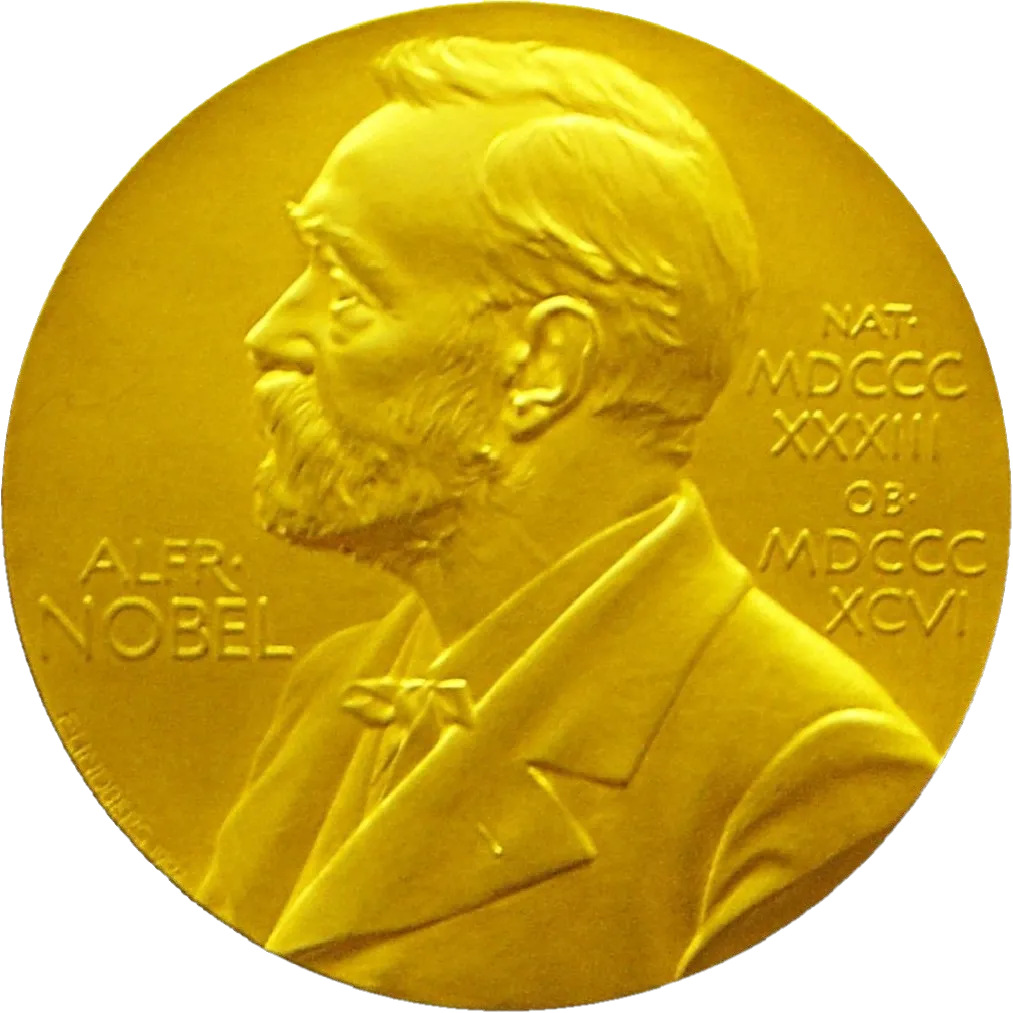
Gerardus 't Hooft and Martinus J.G. Veltman were recognized by the Nobel Prize in Physics for their contributions to understanding the quantum structure of electroweak interactions. 't Hooft and Veltman developed mathematical techniques that provided clarification to the complex field of high-energy physics.
Their work focused on the Standard Model of particle physics, which describes the fundamental forces including electromagnetism and the weak force. The duo's research resolved significant issues related to the renormalization of gauge theories. Renormalization is a critical process required to eliminate infinities from calculations in quantum field theory, enabling the derivation of meaningful physical predictions.
Until their intervention, theoretical physicists struggled with calculations due to these infinities. The methods pioneered by 't Hooft and Veltman allowed for more accurate and consistent predictions within the framework of the Standard Model. Their breakthrough provided a deeper understanding of how particles interact and led to further advancements in particle physics.
Their findings have had broad implications, influencing subsequent research and experiments in particle accelerators and contributing to the discovery of particles like the Higgs boson. This work has paved the way for a more refined view of the fundamental forces and particles, leading to new technologies and methodologies in both theoretical and experimental physics.
The contributions of 't Hooft and Veltman underscore the significance of theoretical advancements in furthering scientific knowledge and driving progress in understanding the universe's fundamental components.
#QuantumPhysics #ElectroweakInteractions #NobelPrize #ParticlePhysics #ScientificBreakthrough #MoofLife
Primary Reference
The The Nobel Prize in Physics 1999 - Illustrated presentation ...
Explore the Life Moments of
 AI Twin