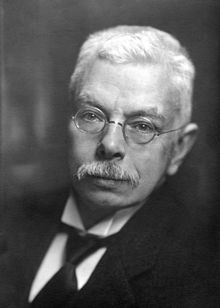
Lorentz and Zeeman's Nobel-winning work on magnetism and radiation laid foundations for modern physics.
Sweden
Science
Technology
3 min read
Updated By: History Editorial Network (HEN)
Published:
Hendrik A. Lorentz and Pieter Zeeman received recognition for their pioneering work on the influence of magnetism on radiation phenomena. Their research laid the foundation for understanding the interaction between magnetic fields and light, a crucial area in the field of physics. Lorentz developed the theoretical framework that described how light waves interact with charged particles in a magnetic field. Zeeman, through meticulous experimentation, observed the splitting of spectral lines in the presence of a magnetic field, now known as the Zeeman effect.
This work significantly advanced the study of electron behavior and the nature of electromagnetic radiation. Their findings confirmed the underlying principles of electromagnetic theory and provided experimental validation that further solidified the foundations of quantum mechanics. The awarded research has widespread applications, influencing various fields including atomic physics, quantum optics, and spectroscopy.
The recognition of Lorentz and Zeeman underscores the importance of theoretical research coupled with experimental validation in the progression of scientific knowledge. Their contributions continue to influence contemporary studies and technological advancements.
#MoofLife #Physics #NobelPrize #Magnetism #RadiationPhenomena #ScientificResearch #QuantumMechanics #Spectroscopy
Primary Reference
Nobel Prize in Physics 1902 - Award ceremony speech - NobelPrize ...
Explore the Life Moments of
 AI Twin