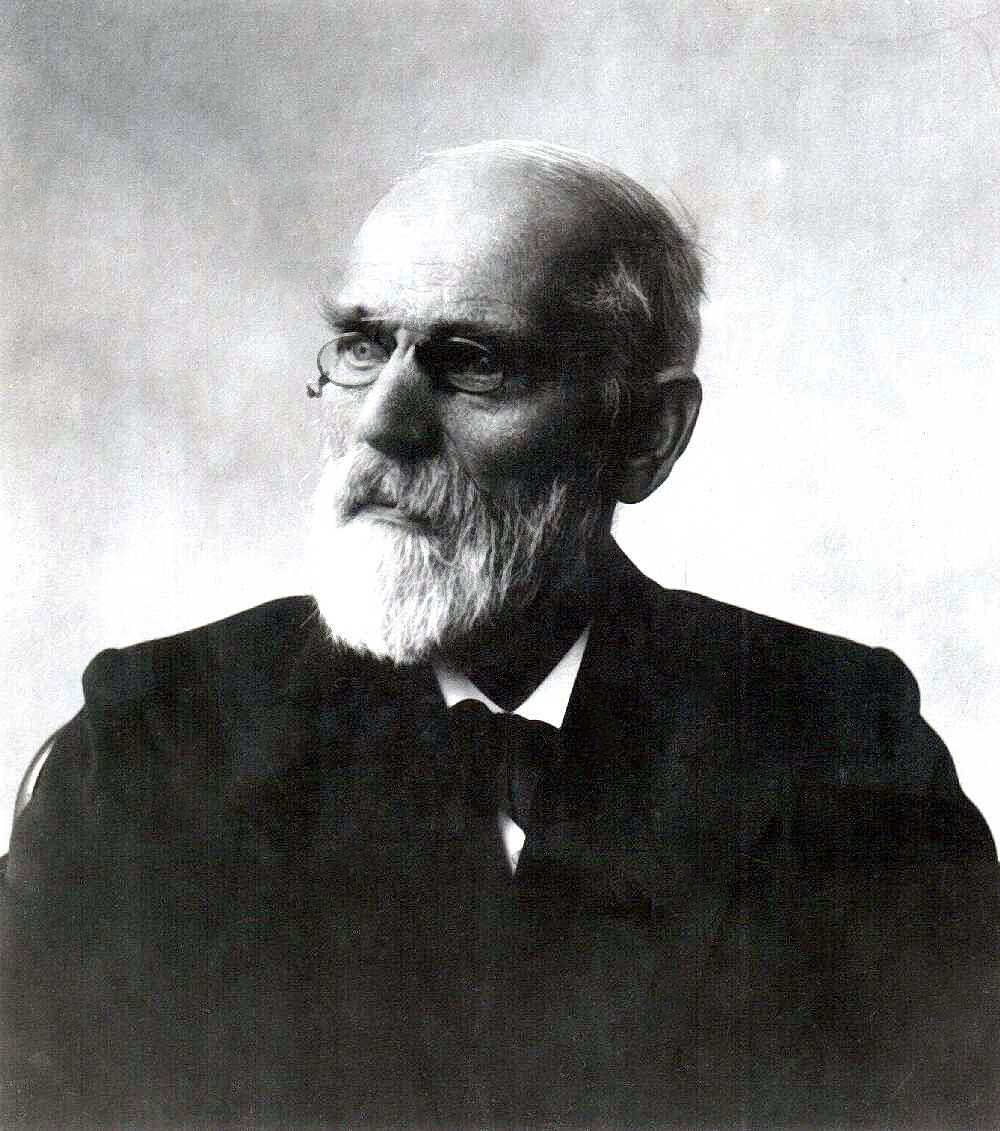
Johannes van der Waals' Nobel Prize for His Revolutionary Equation of State for Real Gases
Sweden
Science
Technology
4 min read
Updated By: History Editorial Network (HEN)
Published:
Johannes Diderik van der Waals was recognized for his contributions to the field of physics, specifically for his work on the equation of state for gases and liquids. Van der Waals' research primarily focused on understanding the behavior of molecules in different states of matter. His equation incorporated the effects of molecular size and the intermolecular forces in gases and liquids, revolutionizing thermodynamics and physical chemistry.
Van der Waals' work addressed the limitations of the ideal gas law, which did not account for the volume occupied by gas molecules or the attraction between them. By integrating these factors into his equation, he provided a more accurate representation of the behavior of real gases. This advancement facilitated the development of the van der Waals equation of state:
\[ \left(P + a \cdot \frac{n^2}{V^2}\right)(V - nb) = nRT \]
Where \( P \) is pressure, \( V \) is volume, \( n \) is the number of moles, \( R \) is the gas constant, \( T \) is temperature, and \( a \) and \( b \) are constants specific to each gas.
The acknowledgment of his work underscored the importance of theoretical physics in explaining and predicting physical phenomena. The van der Waals equation has since played a crucial role in the study of critical phenomena, phase transitions, and the properties of fluids, profoundly impacting various scientific and industrial processes.
His contributions laid vital groundwork for future studies in molecular physics, paving the way for advancements in material science and chemical engineering. This recognition for van der Waals' achievements highlighted the significance of his findings in the broader scientific community.
#MoofLife #Physics #NobelPrize #EquationOfState #VanDerWaals #Chemistry #ScientificImpact
Primary Reference
Johannes Diderik van der Waals - Wikipedia
Explore the Life Moments of
 AI Twin