Climate Modeling Innovations and Disorder Theory Recognized in Nobel Awards
Sweden
Science
Global Trade
3 min read
Updated By: History Editorial Network (HEN)
Published:
Updated:
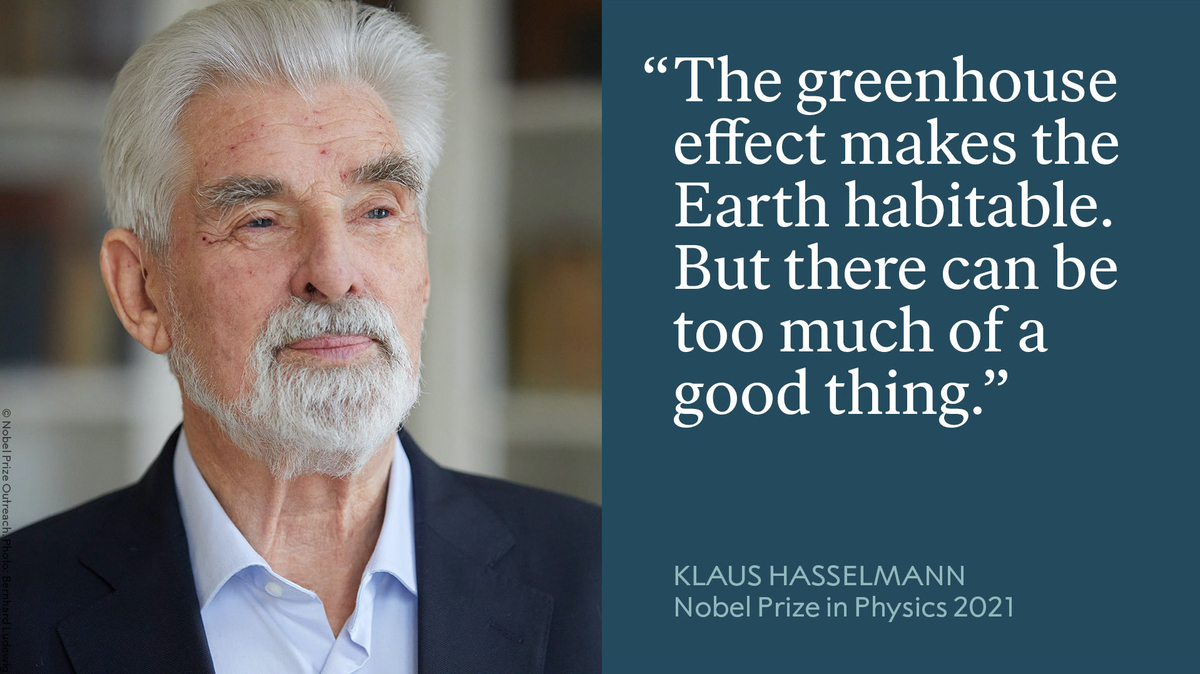
Syukuro Manabe and Klaus Hasselmann received recognition for their contributions to climate modeling and the prediction of global warming, while Giorgio Parisi was honored for uncovering the interplay of disorder and fluctuations in physical systems. The awards underscored advancements in understanding climate change dynamics and physical systems behavior.
Manabe's work involved pioneering climate models that showed how increases in atmospheric carbon dioxide could lead to rising temperatures. His efforts laid the groundwork for today's climate predicting models. Hasselmann's research complemented this by linking short-term weather phenomena to long-term climate trends, creating methods that have shown that human activities contribute to global warming.
Parisi's contributions spanned beyond climate into complex systems, elucidating how disorder and fluctuations impact physical systems. His theories inform a wide range of fields, from materials science to neuroscience, offering insights into chaotic behavior in complex systems.
These recognitions emphasize the significance of scientific research in addressing global challenges such as climate change. Their contributions have provided invaluable tools for policymakers and have shaped environmental strategies worldwide.
#ClimateScience #PhysicsResearch #NobelPrize #MoofLife #GlobalWarming #ClimateModeling #ComplexSystems
Explore the Life Moments of
 AI Twin