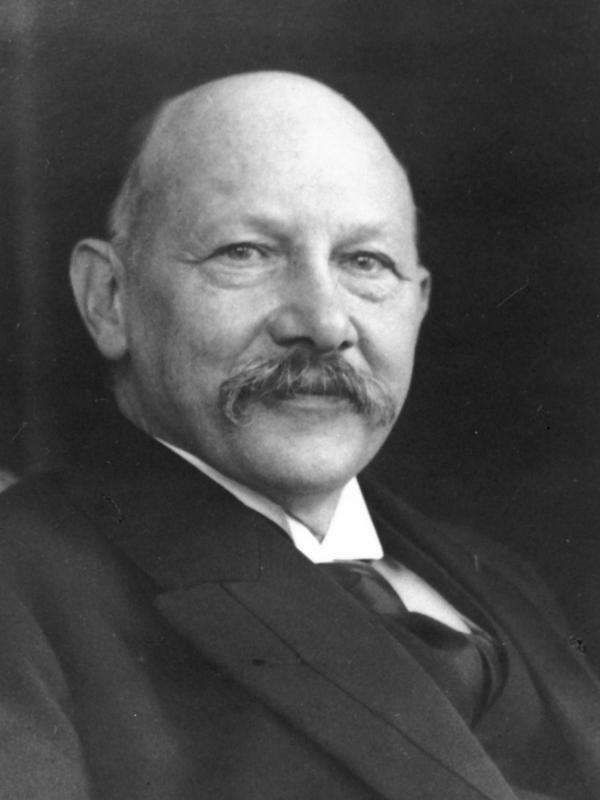
Nobel Laureate Heike Kamerlingh Onnes: Pioneer in Low-Temperature Physics
Sweden
Science
4 min read
Updated By: History Editorial Network (HEN)
Published:
Heike Kamerlingh Onnes was honored with the Nobel Prize in Physics for his pioneering research into the properties of matter at low temperatures, culminating in the successful production of liquid helium. Onnes, a Dutch physicist, undertook extensive experiments at the University of Leiden to explore phenomena at cryogenic temperatures. His meticulous work led to the liquefaction of helium, a significant milestone in the field of low-temperature physics.
The ability to produce liquid helium opened the door to new realms of scientific inquiry, particularly in understanding superconductivity—the phenomenon where certain materials exhibit zero electrical resistance at very low temperatures. Onnes observed this phenomenon in mercury, an element that becomes superconductive below a critical temperature. His insights laid the foundation for further advancements in quantum mechanics and material science.
Onnes's work impacted various scientific fields, from chemistry to engineering, enabling advancements in technologies that rely on low-temperature environments. His contributions have had wide-ranging implications, including enhancing the efficiency of magnetic resonance imaging (MRI) machines that use superconducting magnets.
The significance of Onnes's achievements is reflected in the broad recognition of his work and the continuing relevance of his research in both theoretical and applied physics. The precision and rigor of his approach to scientific experimentation set a new standard for future explorations in cryogenics and beyond.
#NobelPrize #Physics #Cryogenics #Superconductivity #LiquidHelium #ScienceResearch #Innovation #MoofLife
Primary Reference
Nobel Prize in Physics 1913 - Presentation Speech - NobelPrize.org
Explore the Life Moments of
 AI Twin