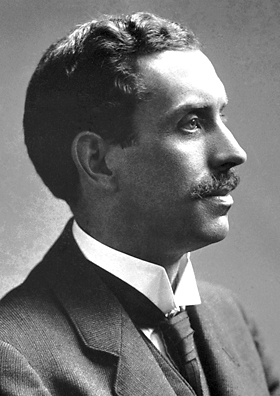
Charles Glover Barkla: Pioneer of Characteristic X-rays and Quantum Theory.
Sweden
Science
4 min read
Updated By: History Editorial Network (HEN)
Published:
Charles Glover Barkla received recognition for his work on the characteristic X-rays of elements. His research provided significant insight into the emission of X-rays, also known as Röntgen radiation, when elements were exposed to secondary X-ray radiation. Barkla's studies demonstrated that the secondary radiations consisted of characteristic X-rays unique to each element, a discovery that confirmed the quantum theory of radiation.
Educated at the University of Cambridge and the University of Liverpool, Barkla's academic journey equipped him with a solid foundation in experimental physics. By systematically examining the X-ray spectra of various elements, he deduced that each element emitted X-rays of specific wavelengths. This finding allowed for better understanding of atomic structures and contributed to the development of quantum mechanics and atomic physics.
Barkla's discovery had significant implications in both theoretical and applied sciences. It opened avenues for further research into the inner structures of atoms, paving the way for advancements in X-ray spectroscopy. This laid the groundwork for various applications in medical imaging, material science, and chemistry.
At the time of the award, Barkla was a professor at a renowned university, continuing his work and inspiring many students and fellow researchers. His achievements were recognized as a foundational contribution to the field of physics. The recognition highlighted the importance of his scientific endeavors and emphasized ongoing efforts to understand atomic composition and behavior.
#Physics #Xrays #NobelPrize #CharlesBarkla #AtomicStructure #QuantumTheory #ScientificDiscovery #MoofLife
Primary Reference
Visual History Of Nobel Prize - RPubs
Explore the Life Moments of
 AI Twin