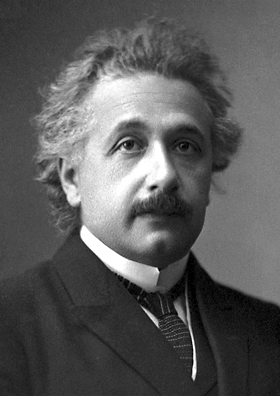
Albert Einstein: Nobel Prize for Photoelectric Effect Theory
Sweden
Science
Technology
4 min read
Updated By: History Editorial Network (HEN)
Published:
Albert Einstein was recognized for his contributions to theoretical physics, specifically his discovery of the law of the photoelectric effect. At this event, he was awarded the Nobel Prize in Physics. His work on the photoelectric effect demonstrated that light could be understood as both a wave and a particle, a groundbreaking idea that helped to usher in the era of quantum mechanics.
Einstein's photoelectric effect theory posited that light consists of packets of energy called photons. When light is shined on a material, these photons can be absorbed by electrons, causing the electrons to be ejected from the material's surface. This phenomenon could not be explained by classical wave theories of light and required a quantum perspective, thereby providing crucial evidence for the quantum theory of light.
The award acknowledged the impact of Einstein's theoretical advancements, which had profound implications for both physics and technology. The application of the photoelectric effect can be seen in modern innovations including photoelectric cells and various forms of light detection technologies.
Einstein's recognition by the Nobel Committee not only celebrated his specific achievements in the field of physics but also served to elevate the importance of theoretical physics in the broader scientific community. His work paved the way for many future developments in the understanding of quantum mechanics and atomic theory, influencing a generation of physicists.
#PhotoelectricEffect #TheoreticalPhysics #QuantumMechanics #NobelPrizePhysics #AlbertEinstein #PhysicsInnovation #MoofLife
Primary Reference
The Nobel Prize in Physics 1921 - NobelPrize.org
Explore the Life Moments of
 AI Twin