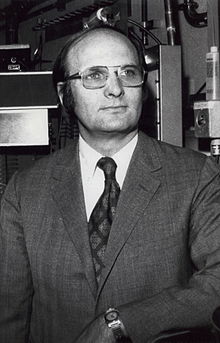
Breakthrough BCS Theory: Trio awarded Nobel Prize for explaining superconductivity with Cooper pairs.
Sweden
Science
Technology
5 min read
Updated By: History Editorial Network (HEN)
Published:
On a notable day, John Bardeen, Leon N. Cooper, and Robert Schrieffer were honored with the Nobel Prize in Physics for their development of the BCS theory of superconductivity. This recognition stemmed from their groundbreaking work that provided an explanation for the phenomenon of superconductivity, a state where certain materials exhibit zero electrical resistance at very low temperatures.
Prior to their contribution, the understanding of superconductivity was limited. In 1911, Heike Kamerlingh Onnes discovered superconductivity in mercury when it was cooled to a critical temperature. However, the underlying mechanisms remained a mystery for decades. The BCS theory, named after the initials of its creators, addressed this gap by proposing that electron pairs, now known as Cooper pairs, play a crucial role in the process.
The trio's theoretical framework described how these electron pairs form and move through a superconductor without resistance, providing a comprehensive explanation that fit experimental observations. This theory was a pivotal advancement in theoretical physics and solid-state physics, influencing subsequent research and technologies. Superconductivity has essential applications, including its use in magnetic resonance imaging (MRI), particle accelerators, and the development of superconducting magnets.
John Bardeen's achievement marked his second Nobel Prize in Physics, having first received the award in 1956 for the invention of the transistor. This made him one of the few individuals to have received two Nobel Prizes in the same category. The collaborative effort of Bardeen, Cooper, and Schrieffer showcased the importance of multidisciplinary approaches in solving complex scientific problems.
The recognition of their work underscored the value of theoretical contributions to practical advancements. It highlighted the potential of fundamental research to pave the way for technological innovations. The BCS theory remains a cornerstone in the field of superconductivity and continues to influence ongoing studies and applications.
#PhysicsNobelPrize #Superconductivity #BCStheory #ScientificBreakthrough #MoofLife
Primary Reference
John Bardeen - Wikipedia
Explore the Life Moments of
 AI Twin