The Nobel-Winning Franck-Hertz Experiment Revolutionized Atomic Physics and Quantum Mechanics
Sweden
Science
Technology
4 min read
Updated By: History Editorial Network (HEN)
Published:
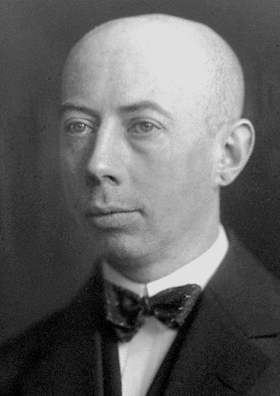
James Franck and Gustav Hertz were recognized for their groundbreaking work in atomic physics when awarded the Nobel Prize in Physics for their experimental discovery of the laws governing the impact of an electron upon an atom. This research provided crucial evidence supporting the Bohr model of the atom, making a significant contribution to the understanding of atomic structure and quantum mechanics.
Their experiments, known as the Franck-Hertz experiments, involved directing a stream of electrons through a vapor of mercury atoms. They measured the kinetic energy of the electrons before and after collisions with the mercury atoms. The results showed that electrons lose specific amounts of energy when colliding with the atoms, implying that atoms have quantized energy levels. This finding supported Niels Bohr's theory that electrons occupy discrete orbits around the nucleus.
This discovery had a profound impact on the field of physics. It offered experimental confirmation of quantum theory and played a crucial role in advancing atomic physics. The quantization observed by Franck and Hertz marked an important step forward from classical physics, providing a deeper understanding of atomic interactions and energy transfer mechanisms.
Their research influenced the development of quantum mechanics, an area of physics that has led to numerous technological advancements, including semiconductors, lasers, and various electronic devices. The Franck-Hertz experiment is still used as a fundamental demonstration in physics education to illustrate quantized energy levels.
#PhysicsPioneers #NobelPrize #AtomicPhysics #QuantumMechanics #ScientificDiscovery #MoofLife
Primary Reference
Nobel Prize in Physics 1925 - Presentation Speech - NobelPrize.org
Explore the Life Moments of
 AI Twin