Nobel Prize Winners Transform Market Understanding with Asymmetric Information Studies
Sweden
Science
Economic Downturn
5 min read
Updated By: History Editorial Network (HEN)
Published:
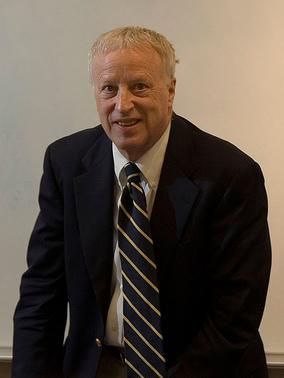
The Nobel Prize in Economic Sciences was awarded to George A. Akerlof, A. Michael Spence, and Joseph E. Stiglitz for their substantial contributions to the study of markets with asymmetric information. Their pioneering work fundamentally changed the understanding of how information disparities affect market behavior, efficiency, and outcomes.
George A. Akerlof's notable paper "The Market for Lemons" introduced the concept of adverse selection, illustrating how quality uncertainty can lead to market failure. Akerlof's analysis showed that sellers of low-quality goods could drive high-quality goods out of the market, given that buyers cannot accurately assess product quality.
A. Michael Spence's work on signaling theory demonstrated how individuals can use signals to convey private information to others, influencing market decisions. His model illustrated how job market applicants use educational attainment as a signal to potential employers about their capability and productivity, hence addressing information gaps.
Joseph E. Stiglitz focused on the concept of screening, where economic agents with less information design mechanisms to induce those with more information to reveal their hidden characteristics. His research highlighted how insurance companies and other institutions create policies and contracts to cope with asymmetric information.
The combined contributions of these economists provided new insights into the challenges of information asymmetry, reshaping several fields within economics, including labor economics, insurance, and contract theory. Their work has had profound implications for public policy, leading to regulations designed to mitigate the negative effects of information asymmetry in various markets.
By addressing the complexities of markets operating under conditions of imperfect information, their analyses have helped to develop more efficient economic systems and better-informed policy decisions.
#NobelPrize #EconomicSciences #AsymmetricInformation #MarketFailure #PolicyImpact #MoofLife
Primary Reference
The Prize in Economic Sciences 2001 - Press release - NobelPrize.org
Explore the Life Moments of
 AI Twin