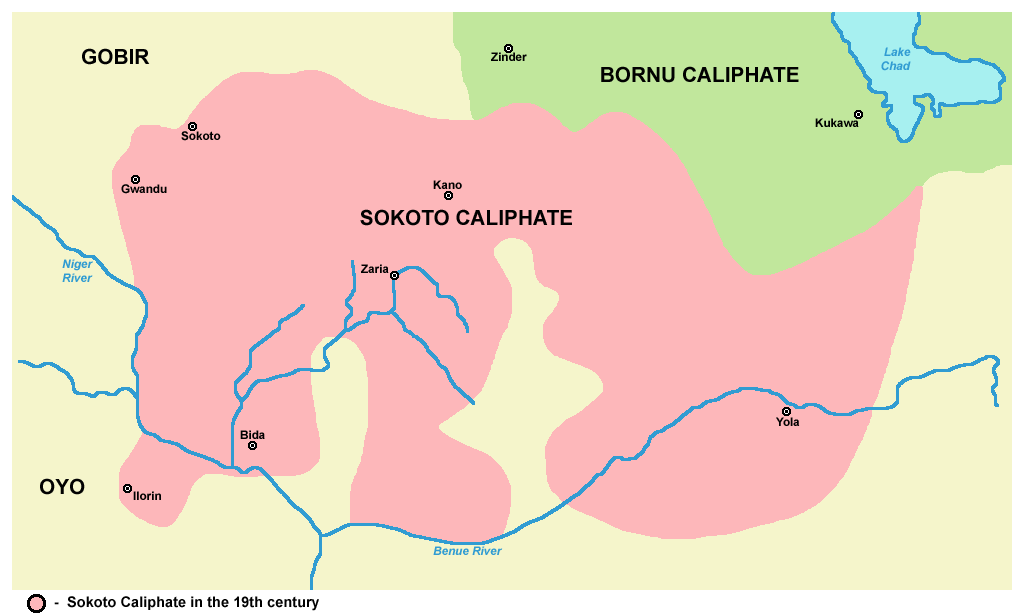
Formation of the Sokoto Caliphate under Usman dan Fodio
Political
Cultural Influence
4 min read
Updated By: History Editorial Network (HEN)
Published:
The rise of the Sokoto Caliphate under Usman dan Fodio marked a decisive turning point in the history of Nigeria. Usman dan Fodio, a charismatic scholar and leader, launched a Jihad against the corrupt Hausa rulers in the early 19th century. He sought to establish a purified Islamic state based on the principles of justice and equality. With a dedicated following and military prowess, Usman dan Fodio was able to defeat the Hausa rulers and establish the Sokoto Caliphate.
The impact of the rise of the Sokoto Caliphate was profound and far-reaching. It led to the consolidation of political power in the region and the spread of Islam. The caliphate introduced administrative reforms, Islamic law, and education systems that promoted learning and scholarship. It also facilitated trade and economic development, contributing to the prosperity of the region. The Sokoto Caliphate became a center of Islamic learning and culture, attracting scholars and students from across West Africa.
The rise of the Sokoto Caliphate under Usman dan Fodio paved the way for a new era in Nigerian history. It established a model of governance that combined Islamic principles with local traditions, shaping the political and social landscape of the region for years to come. The legacy of Usman dan Fodio and the Sokoto Caliphate continues to resonate in Nigeria today, influencing religious, cultural, and political practices.
#SokotoCaliphate #UsmandanFodio #IslamicRevival #PoliticalTransformation #CulturalInfluence
Primary Reference
Sokoto Caliphate - Wikipedia

Explore the Life Moments of
 AI Twin