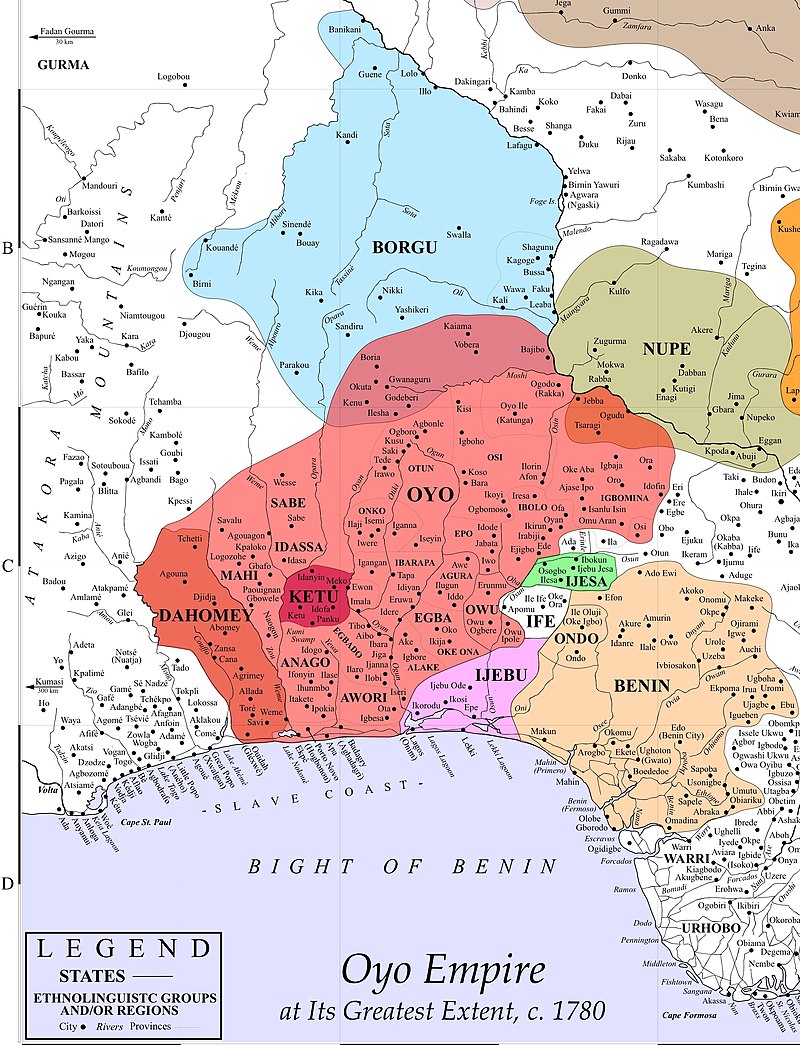
Devastation of Oyo Empire's capital by Fulani Jihadists.
Cultural
4 min read
Updated By: History Editorial Network (HEN)
Published:
The Oyo Empire, once a powerful West African state known for its military strength and vibrant culture, faced a devastating blow when its capital, Oyo-Ile, was destroyed by Fulani Jihadists. The Oyo Empire had been a dominant force in the region for centuries, controlling vast territories and commanding respect from neighboring kingdoms.
The Fulani Jihadists, led by their charismatic leader, launched a campaign to expand their influence and spread their Islamic beliefs. The siege on Oyo-Ile was a strategic move to weaken the Oyo Empire's power and establish Fulani control over the region.
The fall of Oyo-Ile had far-reaching consequences. It marked the end of the Oyo Empire's dominance and triggered a period of political instability and upheaval in the region. The destruction of the capital city disrupted trade routes, led to the displacement of many inhabitants, and caused a widespread sense of uncertainty and fear among neighboring communities.
The event also had cultural implications, as it resulted in the loss of valuable artifacts, historical records, and architectural landmarks that were integral to the Oyo Empire's heritage. The destruction of Oyo-Ile served as a somber reminder of the fragile nature of empires and the ever-present threat of external invasions.
In the aftermath of the attack, the Oyo Empire struggled to recover and reclaim its former glory. The once-mighty empire was forced to confront a shifting political landscape and adapt to new power dynamics in the region.
Today, the ruins of Oyo-Ile stand as a testament to the empire's rich history and enduring legacy. The destruction of the Oyo Empire's capital by Fulani Jihadists remains a poignant chapter in Nigeria's past, underscoring the complexities of power, religion, and cultural heritage in the region. #OyoEmpire #FulaniJihadists #NigeriaHistory
Primary Reference
Ilorin | Nigeria, Map, Facts, & Population | Britannica

Explore the Life Moments of
 AI Twin