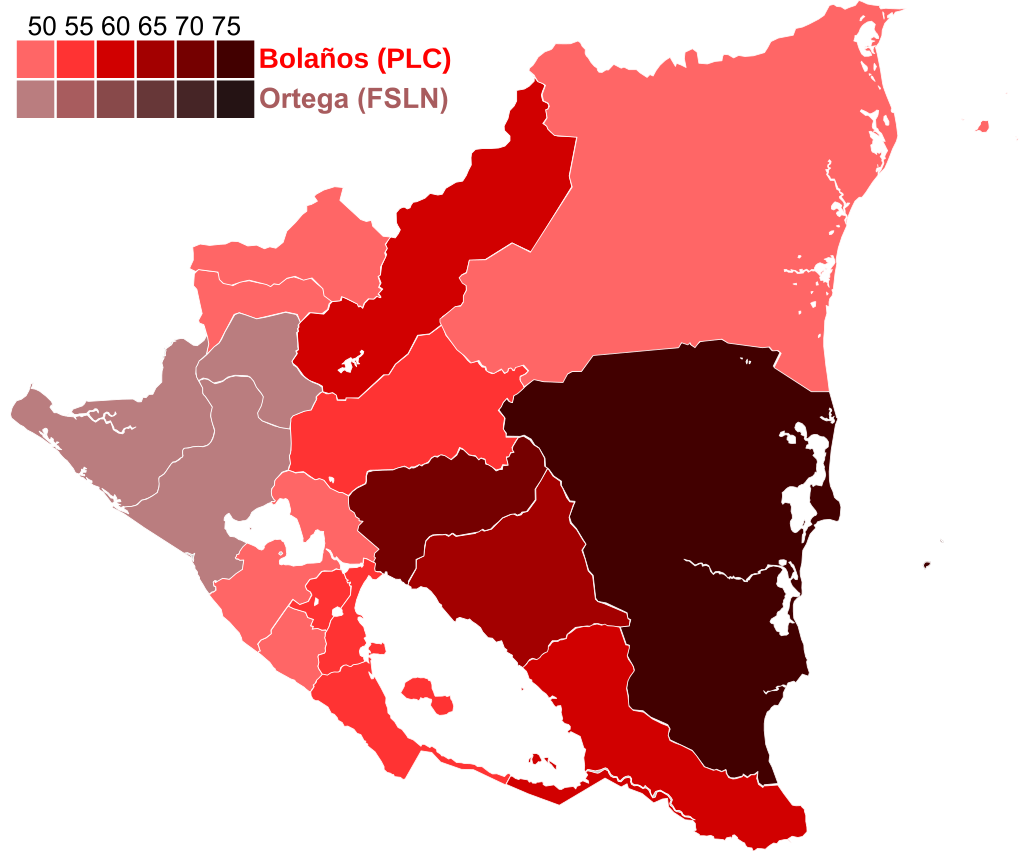
2001 Elections Result in PLC Victory Over FSLN with Alemán's Vice President Enrique
Nicaragua
Politics
Elections
Nicaragua
3 min read
Updated By: History Editorial Network (HEN)
Published:
Updated:
In 2001, Enrique Bolaños was elected as the President of Nicaragua, succeeding Arnoldo Alemán, who had served as president from 1997 to 2002. Bolaños, a member of the Liberal Constitutional Party (PLC), took office amid a political landscape marked by the ongoing rivalry between the PLC and the Sandinista National Liberation Front (FSLN). Despite Bolaños's initial support, the political climate shifted dramatically when Alemán was convicted in 2003 for serious crimes including embezzlement, money laundering, and corruption, leading to a 20-year prison sentence. This conviction triggered a political crisis, as liberal and Sandinista parliament members united to strip Bolaños of his presidential powers, demanding his resignation and threatening impeachment. The situation escalated when the Sandinistas publicly withdrew their support for Bolaños, particularly after U.S. Secretary of State Colin Powell advised him to distance himself from the FSLN. This 'slow motion' crisis drew international attention, with the United States, the Organization of American States (OAS), and the European Union opposing any moves to remove Bolaños from office. The political turmoil highlighted the fragility of Nicaragua's democratic institutions and the complexities of its political alliances during this tumultuous period.

Explore the Life Moments of
 AI Twin