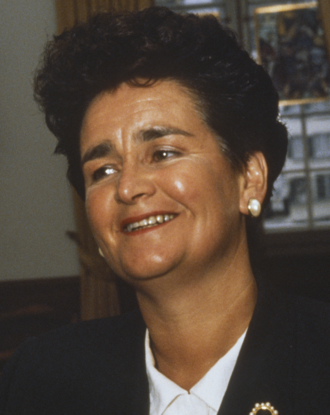
The "Mother of All Budgets" is presented by Finance Minister Ruth Richardson.
New Zealand
10 min read
Updated By: History Editorial Network (HEN)
Published:
Updated:
In 1991, New Zealand's Finance Minister Ruth Richardson presented what became known as the "Mother of All Budgets." This budget was a transformative and controversial financial plan that marked a significant shift in New Zealand's economic and social policy. It aimed at extensive economic reform, including substantial cuts to social welfare and public spending, reflecting a broader neoliberal approach to governance.
Background: Economic Context
By the late 1980s and early 1990s, New Zealand was undergoing a period of significant economic restructuring. The Labour government (1984-1990) had initiated a series of market-oriented reforms under Finance Minister Roger Douglas, known as "Rogernomics," which aimed to liberalize the economy, reduce government intervention, and promote efficiency. These reforms included deregulation, privatization of state assets, and tax reforms.
Despite these efforts, New Zealand faced ongoing economic challenges, including high public debt, unemployment, and sluggish economic growth. When the National Party, led by Jim Bolger, won the 1990 election, they inherited these issues and were committed to further economic restructuring.
Ruth Richardson and the 1991 Budget
Ruth Richardson, the newly appointed Finance Minister, was a strong advocate of neoliberal economic policies. Her approach was influenced by the belief that reducing government spending and encouraging private sector growth were essential for economic recovery and long-term prosperity.
Key Components of the "Mother of All Budgets":
Welfare Cuts: The budget introduced significant cuts to social welfare benefits. Unemployment, sickness, and domestic purposes benefits were reduced by up to 25%. These cuts were intended to reduce government expenditure and encourage beneficiaries to seek employment.
Public Spending Reductions: The budget included substantial cuts to public spending across various sectors, including health and education. These reductions aimed to decrease the fiscal deficit and promote efficiency within public services.
Labor Market Reforms: The budget laid the groundwork for labor market reforms, which were later implemented through the Employment Contracts Act 1991. This act deregulated the labor market, making it easier for employers to hire and fire workers and reducing the influence of trade unions.
Tax Adjustments: While the budget focused primarily on spending cuts, it also included some adjustments to the tax system to simplify and improve efficiency.
Impact and Controversy
The "Mother of All Budgets" was highly controversial and sparked significant public debate and protest. The immediate impacts included:
Increased Hardship: The welfare cuts led to increased hardship for many low-income and vulnerable New Zealanders. There were reports of rising poverty and homelessness, and the cuts were widely criticized for disproportionately affecting the most disadvantaged members of society.
Economic Response: Supporters of the budget argued that it was necessary to stabilize the economy, reduce the fiscal deficit, and lay the foundations for future growth. However, the short-term economic benefits were mixed, with ongoing debates about the long-term impacts.
Political Backlash: The budget was deeply unpopular among many voters, leading to significant political backlash. It contributed to tensions within the National Party and broader public dissatisfaction with the government's economic policies.
Labor Market Changes: The subsequent labor market reforms facilitated by the budget led to increased flexibility in the labor market but also contributed to job insecurity and weakened union power.
Legacy
The "Mother of All Budgets" is remembered as one of the most dramatic and controversial economic policy shifts in New Zealand's history. It epitomized the neoliberal approach to economic management that dominated New Zealand politics during this period.
Long-Term Effects
The long-term effects of the budget and the associated reforms are still debated. While some argue that the measures were necessary for economic stability and growth, others highlight the social costs and increased inequality that followed.
In subsequent years, New Zealand's economic policy saw further adjustments as later governments attempted to address some of the social issues that arose from the 1991 reforms. The budget remains a significant reference point in discussions about economic policy, welfare, and social justice in New Zealand.
#MomentsOfLife #MoofLife_Moment #MoofLife #NewZealandHistory #MotherOfAllBudgets #RuthRichardson #EconomicReform #Neoliberalism #WelfareReform #PublicPolicy
Primary Reference
The 'mother of all Budgets'

Explore the Life Moments of
 AI Twin