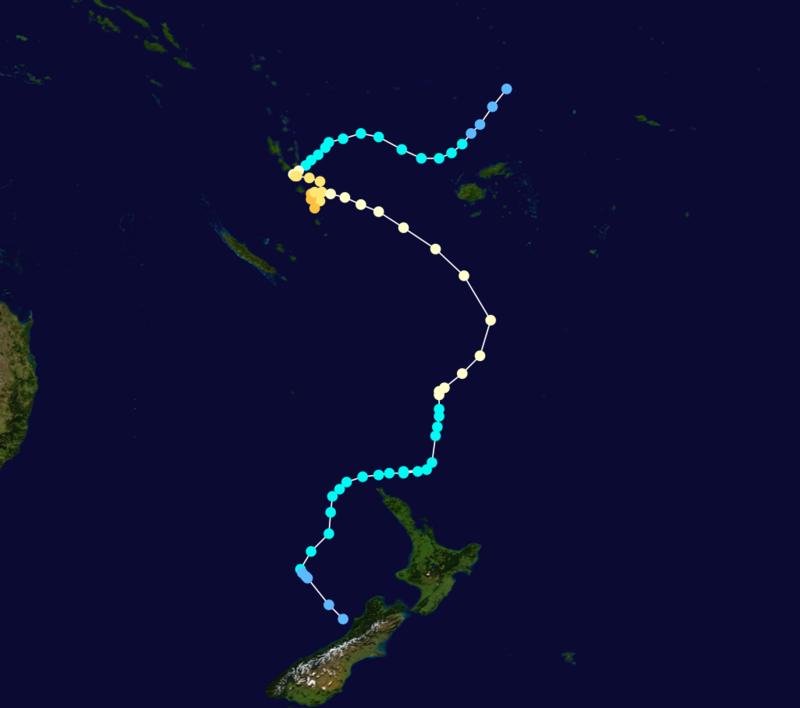
Severe impact of Cyclone Bola on northern North Island.
New Zealand
Natural Disaster
Community Resilience
4 min read
Updated By: History Editorial Network (HEN)
Published:
Updated:
In 1988, Cyclone Bola hit the northern North Island of New Zealand, causing widespread devastation. Cyclone Bola originated from a low-pressure system that intensified into a powerful storm as it approached the North Island.
The cyclone brought heavy rain and strong winds, resulting in severe flooding, landslides, and extensive damage to infrastructure and homes. The regions of Gisborne and Tairāwhiti were particularly hard hit, with bridges washed away, roads submerged, and entire communities cut off from assistance.
Thousands of people were forced to evacuate their homes, seeking refuge in emergency shelters. The New Zealand Defence Force and emergency services worked tirelessly to rescue stranded individuals and provide aid to those affected by the disaster.
The aftermath of Cyclone Bola was felt for months, with recovery efforts hampered by the scale of destruction. The economic impact was significant, with losses in agriculture, forestry, and tourism sectors. The environment also suffered, with widespread erosion and damage to waterways.
Despite the challenges faced, communities banded together to rebuild and recover from the disaster. Lessons were learned about preparedness and response to such natural calamities, leading to improvements in emergency management systems.
Today, the memory of Cyclone Bola serves as a reminder of the power of nature and the resilience of communities in the face of adversity. The event highlighted the importance of disaster preparedness, prompt response, and ongoing support for those affected by such catastrophic events.
#CycloneBola #NewZealand #NaturalDisaster #CommunityResilience #EmergencyManagement
Explore the Life Moments of
 AI Twin