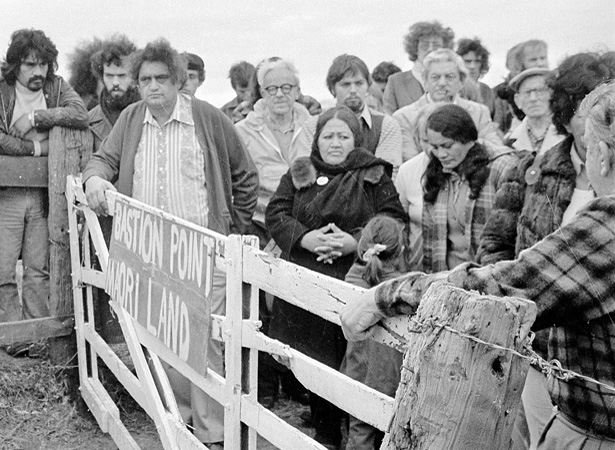
Protesters occupy Bastion Point.
New Zealand
Political
Indigenous Rights
4 min read
Updated By: History Editorial Network (HEN)
Published:
Updated:
In 1977, a group of Maori protesters occupied Bastion Point, Auckland, in an effort to reclaim their ancestral land. The dispute stemmed from a government decision to sell the land, disregarding Maori claims over the area.
Led by protesters like Joe Hawke, the occupation lasted for 507 days, becoming a symbol of Maori activism and resistance against the injustices faced by indigenous communities. Despite facing eviction attempts, the protesters stood their ground, advocating for the recognition of Maori land rights.
The occupation ended in 1978 when police forcibly removed the protesters from Bastion Point. However, the event sparked a nationwide conversation about land rights, treaty obligations, and the need for reconciliation between the Maori people and the New Zealand government.
The occupation of Bastion Point remains a pivotal moment in New Zealand's history, highlighting the ongoing struggle for indigenous rights and the importance of honoring treaty agreements. It served as a catalyst for change, leading to new policies and initiatives aimed at addressing the grievances of the Maori community.
Today, Bastion Point stands as a symbol of resilience and activism, reminding future generations of the ongoing fight for justice and equality. The spirit of the protesters who stood firm in their beliefs continues to inspire indigenous movements worldwide, promoting awareness and advocacy for indigenous rights.
#MaoriActivism #LandRights #IndigenousResistance #TreatyObligations
Explore the Life Moments of
 AI Twin