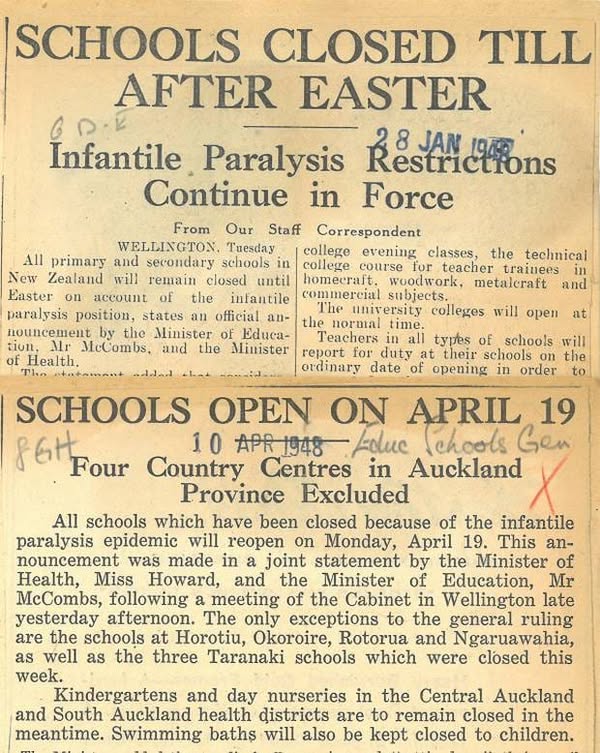
Polio epidemic forces school closures
New Zealand
Public Health
Community Support
4 min read
Updated By: History Editorial Network (HEN)
Published:
Updated:
In New Zealand, a polio epidemic forced authorities to close schools as the highly contagious disease spread rapidly among children. Originating from a virus, polio can cause paralysis and even death in severe cases. The epidemic spread fear among families, with parents worried about the safety of their children.
The closure of schools aimed to prevent the further spread of the disease, as crowded classrooms provided an ideal environment for polio to transmit. Public health officials worked tirelessly to educate the population on proper hygiene practices and the importance of vaccination to curb the epidemic. Vaccination campaigns were organized, aiming to immunize as many children as possible to create herd immunity and protect the community.
The impact of the polio epidemic was deeply felt, with many families experiencing the devastating effects of the disease. Those afflicted faced long-term consequences, such as muscle weakness and paralysis, affecting their quality of life. The epidemic also highlighted the importance of public health initiatives and disease prevention strategies to safeguard the well-being of the population.
Despite the challenges posed by the polio epidemic, communities came together to support one another. Health professionals, volunteers, and government agencies collaborated to provide medical care, support families affected by the disease, and ensure the safety of the population. Through collective effort and resilience, New Zealand was able to overcome the polio epidemic and pave the way for improved public health measures in the future.
#PolioEpidemic #SchoolClosures #PublicHealth #VaccinationCampaigns #CommunitySupport

Explore the Life Moments of
 AI Twin