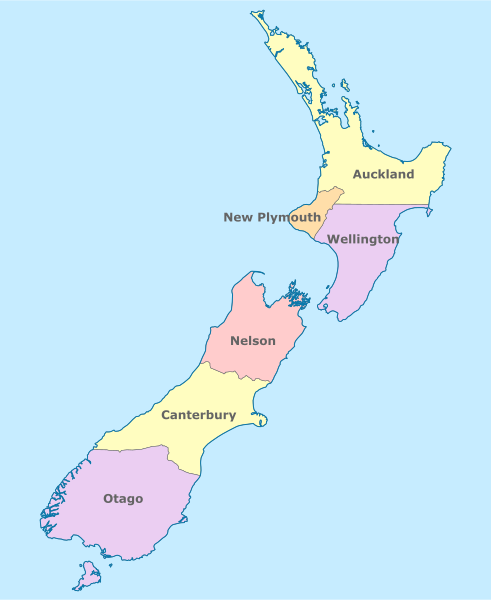
Key points of New Zealand election in 1853, the first year voting qualification was based on property ownership.
New Zealand
Political
4 min read
Updated By: History Editorial Network (HEN)
Published:
Updated:
In the year of 1853, New Zealand held its first general election since the establishment of the colony. The election was a significant milestone in the country's history, marking the beginning of representative government in New Zealand. Prior to this event, the colony had been governed by appointed officials.
The election saw the introduction of a bicameral parliament, consisting of a Legislative Council and a House of Representatives. The members of the House of Representatives were elected by eligible European male settlers, while the members of the Legislative Council were appointed by the governor.
The 1853 General Election allowed the people of New Zealand to have a say in the governance of the colony, with the elected representatives making decisions on behalf of their constituents. This shift towards democracy laid the foundation for the development of New Zealand's political system and set the stage for future elections.
The impact of the 1853 General Election was significant, as it marked a crucial step towards self-governance for New Zealand. The election empowered the people to have a voice in the decisions that affected their lives and paved the way for the country's eventual independence.
Overall, the 1853 General Election was a turning point in New Zealand's history, signaling the beginning of a more democratic form of government. It set the country on a path towards greater self-determination and helped shape the political landscape of New Zealand for years to come.
#NewZealandHistory #DemocracyInAction #PoliticalMilestones
Primary Reference
1853-2020 general elections | Elections
Explore the Life Moments of
 AI Twin