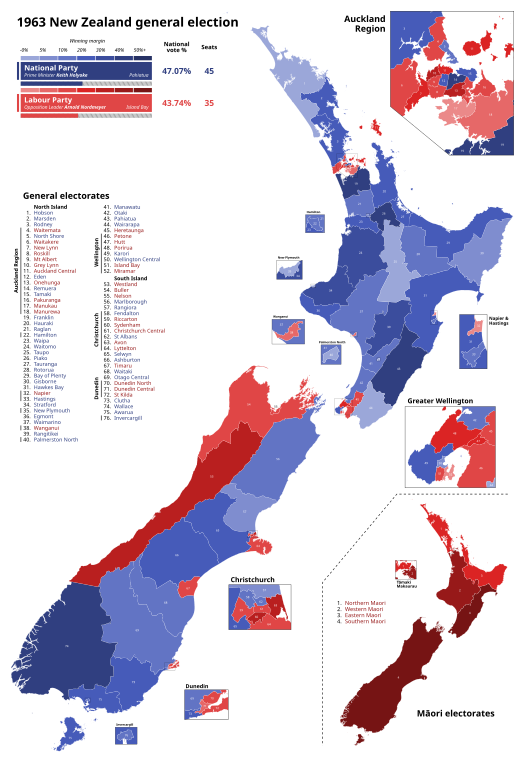
General Election Provides Insight on Public Opinion.
New Zealand
Political
4 min read
Updated By: History Editorial Network (HEN)
Published:
Updated:
In 1963, New Zealand held a general election to determine the composition of the 35th Parliament. The election followed the resignation of the previous Prime Minister and subsequent appointment of a new leader for the governing party.
Leading up to the election, various political parties campaigned on platforms centered around economic policies, social issues, and international relations. The incumbent party highlighted their achievements in office, while the opposition parties outlined their visions for the country's future.
On election day, voters across New Zealand cast their ballots to elect Members of Parliament. The results of the election would ultimately shape the direction of the country for the coming years.
The general election had a significant impact on the political landscape of New Zealand, determining the party that would lead the government and the opposition for the next parliamentary term. The outcome of the election also influenced policy decisions, legislative priorities, and the overall governance of the nation.
In the aftermath of the election, the newly elected Members of Parliament took their seats in the House of Representatives, with the leader of the winning party becoming the Prime Minister. The government would then proceed to implement its agenda, while the opposition played a crucial role in holding the government to account and proposing alternative policies.
Overall, the general election of 1963 was a pivotal moment in New Zealand's democratic process, shaping the country's political landscape and influencing its future direction. It underscored the importance of civic engagement, voting rights, and the democratic principles that govern the nation.
#NewZealand #Election #Politics
Explore the Life Moments of
 AI Twin