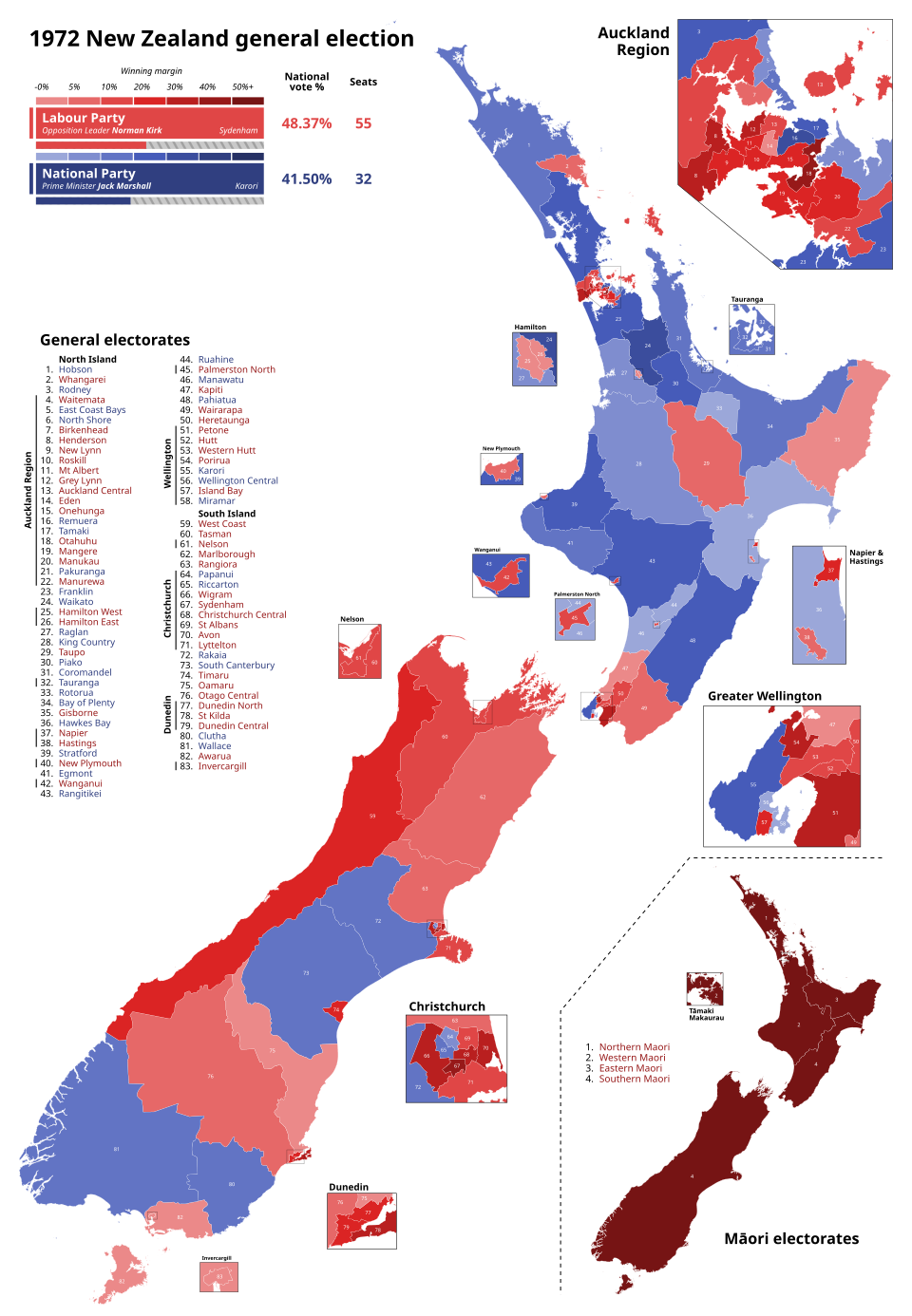
General election: Labour Government with Norman Kirk as Prime Minister.
New Zealand
Political
Social Reform
4 min read
Updated By: History Editorial Network (HEN)
Published:
Updated:
In the general election, the Labour Government led by Norman Kirk was elected, marking a significant political shift in New Zealand. Norman Kirk assumed office as the 29th Prime Minister, bringing with him a vision of social reform and equality. The victory was a result of public dissatisfaction with the previous government's policies and a desire for change.
Norman Kirk, a former union leader, campaigned on a platform focused on improving healthcare, education, and housing for all New Zealanders. His government promised to address inequality and support working-class families. The election outcome reflected a growing demand for progressive policies and a more inclusive society.
The election of the Labour Government under Norman Kirk had a profound impact on New Zealand's political landscape. It marked the beginning of an era of significant social and economic reforms that aimed to create a fairer and more equal society. Kirk's leadership style, characterized by his strong sense of social justice and compassion, resonated with many New Zealanders.
Under the new government, policies were implemented to increase government intervention in the economy, expand welfare programs, and enhance workers' rights. Norman Kirk's administration worked to address issues of poverty, unemployment, and healthcare access, making significant strides towards a more equitable society.
The election of the Labour Government and Norman Kirk's tenure as Prime Minister represented a turning point in New Zealand's history, shaping the country's future direction and values. It set the stage for progressive reforms and a renewed focus on social welfare and equality, leaving a lasting legacy in the nation's political landscape.
#NewZealandPolitics #NormanKirk #SocialReform #LabourGovernment
Explore the Life Moments of
 AI Twin