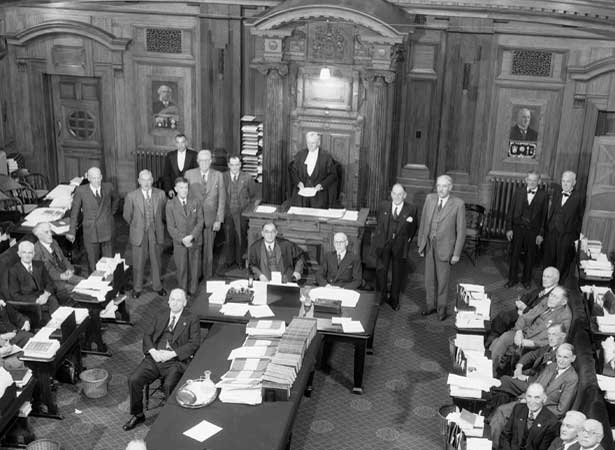
Abolishment of Legislative Council
New Zealand
PoliticalEvent
4 min read
Updated By: History Editorial Network (HEN)
Published:
Updated:
The abolition of the New Zealand Legislative Council in 1950 marked the end of an era in the country's political landscape. The Legislative Council, also known as the upper house, had served as a vital component of the New Zealand Parliament since the mid-19th century. It was initially created to act as a check on the decisions made by the lower house, the House of Representatives.
However, over time, the Legislative Council had become increasingly outdated and ineffective. Its members were appointed for life, leading to a lack of accountability and transparency in the legislative process. As a result, calls for the abolition of the Legislative Council had been growing louder.
The decision to abolish the Legislative Council was met with mixed reactions. Proponents of the move argued that it would streamline the legislative process and make the government more responsive to the needs of the people. Critics, on the other hand, raised concerns about the potential concentration of power in the hands of the lower house.
Despite the controversy surrounding the decision, the abolition of the Legislative Council ultimately represented a significant shift in New Zealand's political system. With its removal, the House of Representatives became the sole legislative body in the country, consolidating power in the hands of elected officials.
In the years following the abolition of the Legislative Council, New Zealand saw significant reforms in its political processes. The move towards a more streamlined and accountable system of government laid the groundwork for future developments in the country's political landscape.
#NewZealand #LegislativeCouncil #Abolition #PoliticalReform #HistoricalEvent
Explore the Life Moments of
 AI Twin