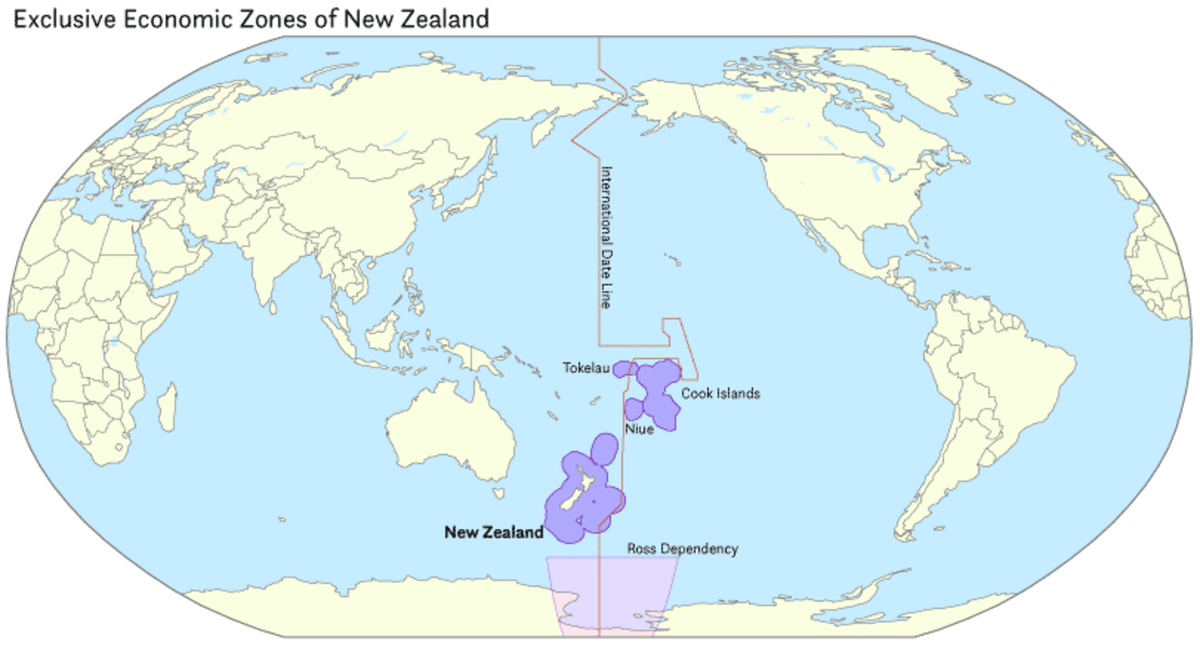
Establishment of 200 Nautical Mile Exclusive Economic Zone
New Zealand
Global Trade
Political
4 min read
Updated By: History Editorial Network (HEN)
Published:
Updated:
In 1977, New Zealand declared its exclusive economic zone (EEZ) stretching 200 nautical miles (370 km) from its shores. This move was in response to the United Nations Convention on the Law of the Sea, which granted coastal states the right to establish such zones. The establishment of the EEZ allowed New Zealand to assert control over its maritime resources, including fishing, oil, and gas exploration.
The declaration of the EEZ had a significant impact on New Zealand's economy and sovereignty. It provided the country with exclusive rights to exploit and manage its marine resources, leading to a boom in the fishing industry. By controlling access to its waters, New Zealand was able to protect its fish stocks and combat illegal fishing activities. The EEZ also opened up opportunities for oil and gas exploration, further contributing to the country's economy.
Internationally, New Zealand's establishment of the EEZ set a precedent for other countries to assert their maritime boundaries. It played a crucial role in shaping the modern legal framework governing the oceans and the rights of coastal states. The move was met with some opposition, particularly from countries with fishing interests in New Zealand's waters. However, New Zealand stood firm in its decision to protect its marine resources and assert its sovereignty.
Overall, the establishment of the 200 nautical mile EEZ in 1977 marked a significant moment in New Zealand's history, solidifying its control over its maritime resources and setting a precedent for other nations to follow.
#NewZealand #ExclusiveEconomicZone #MaritimeResources #Sovereignty
Explore the Life Moments of
 AI Twin