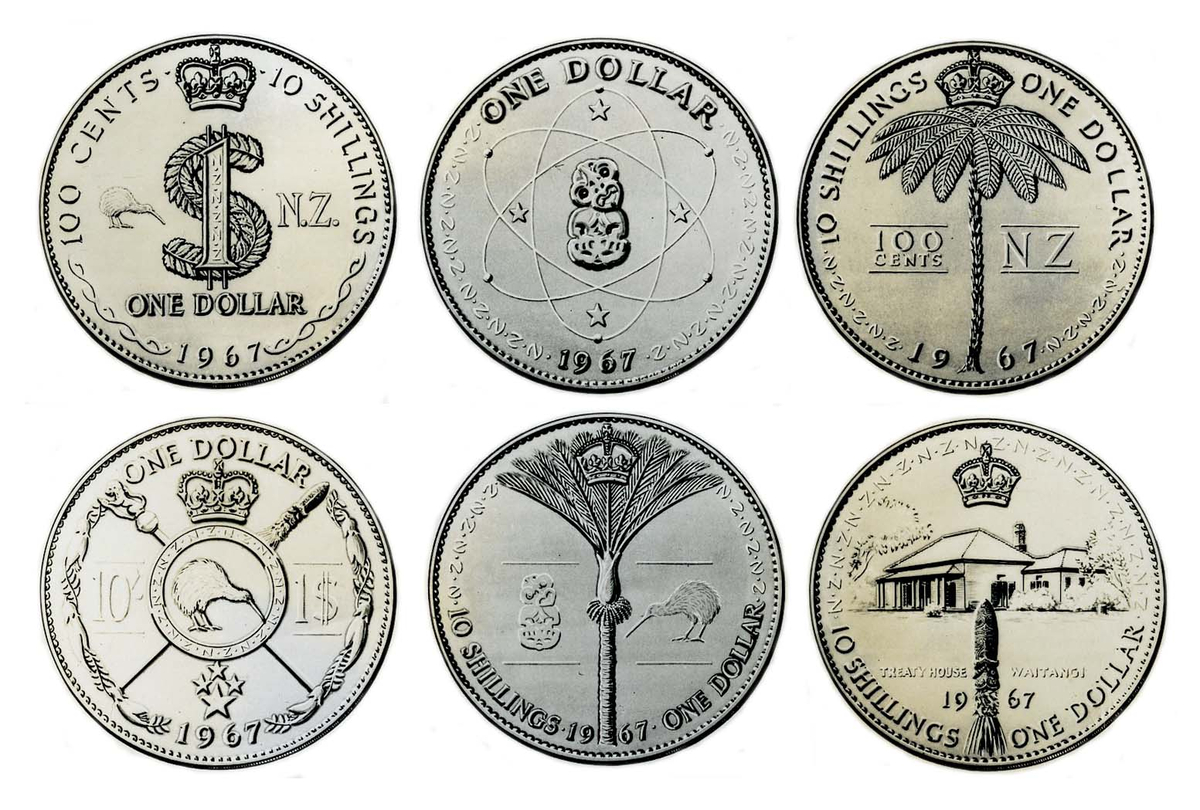
Decimal currency: New Zealand dollar replaces pound at a rate of £1 to $2.
New Zealand
Economic
3 min read
Updated By: History Editorial Network (HEN)
Published:
In July 1967, decimal currency was introduced in New Zealand, marking a shift from the previous pound system to the New Zealand dollar. The conversion rate was set at £1 to $2, with further breakdowns of one shilling to 10 cents and one penny to 5 cents. This transition aimed to simplify monetary transactions and align with international decimal currency standards.
The change to decimal currency had a significant impact on daily transactions and financial record-keeping in New Zealand. It required adjustments in cash registers, pricing labels, and mental calculations for consumers and businesses alike. The introduction of the New Zealand dollar also symbolized the country's modernization and global economic integration during that period.
Despite initial challenges in adjusting to the new currency system, the transition to decimal currency ultimately facilitated easier and more efficient commerce in New Zealand. The simplicity of the decimal system streamlined financial transactions and eliminated the need for complicated conversions between pounds, shillings, and pence.
The introduction of the New Zealand dollar was a pivotal moment in the country's economic history, demonstrating its readiness to embrace modern standards and practices in the financial sector. This shift positioned New Zealand as a progressive nation in line with global currency trends.
#DecimalCurrency #NewZealandDollar #MonetaryTransition #Modernization

Explore the Life Moments of
 AI Twin