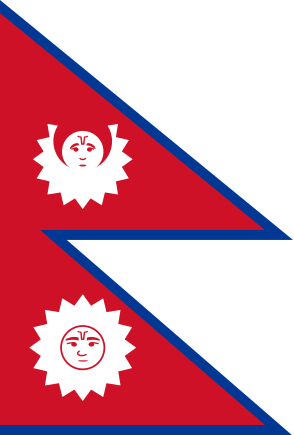
New Constitution proclaims Nepal as Hindu Kingdom
Nepal

Political
CulturalIdentity
5 min read
Updated By: History Editorial Network (HEN)
Published:
In a historical shift, Nepal promulgated a new constitution and declared itself a Hindu Kingdom. This pivotal event shaped the political and social landscape of the country. Prior to this, Nepal was under the Rana regime which maintained autocratic rule while the monarchy remained in the background. The new constitution marked the country's transition towards centralized royal authority with King Mahendra assuming ultimate power.
The new constitution established the Panchayat system, a party-less political structure designed to foster national unity and development under the direct supervision of the king. This system was conceived to eliminate political rivalry and promote a cohesive governance model. Under the Panchayat system, local, district, and national assemblies were expected to function under the directive of the monarchy, essentially consolidating power within the king's hands.
Declaring Nepal as a Hindu Kingdom underscored the cultural and religious identity of the nation. The majority Hindu population saw this as a reaffirmation of Nepal’s historical and religious heritage. However, this move alienated the minority communities, including Buddhists and Muslims, potentially fostering socio-religious divides.
Economically and socially, the new constitution aimed to pursue rapid modernization and development while preserving traditional values. Official statistics showed increased investment in infrastructure projects such as road networks and hydropower. Education and healthcare sectors also saw strategic initiatives aimed at improving literacy rates and healthcare services across the nation. However, the success of these initiatives under a centralized autocratic governance model remained a point of debate.
Overall, the promulgation of the new constitution and the declaration of Nepal as a Hindu Kingdom played a critical role in the country’s mid-20th-century trajectory. The political landscape was centralized around a monarchic governance model while socio-cultural dynamics were geared towards reinforcing Hindu primacy.
#MoofLife #NepalConstitution #HinduKingdom #PanchayatSystem #CulturalIdentity #PoliticalShift #NationBuilding #EconomicDevelopment
Primary Reference
Religion and Law in Nepal
Explore the Life Moments of
 AI Twin