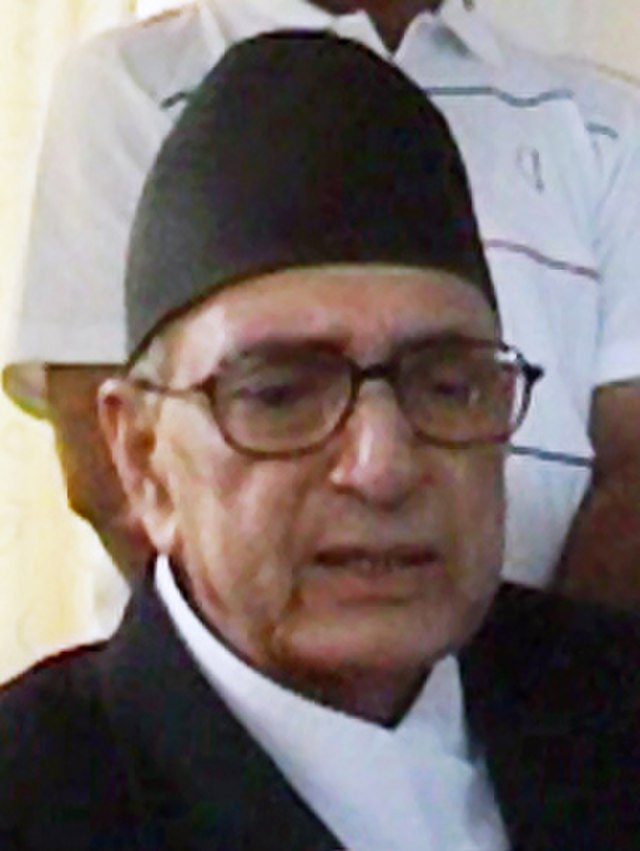
Girija Prasad Koirala becomes prime minister again for the ninth government.
Nepal
Political
GovernanceChallenges
6 min read
Updated By: History Editorial Network (HEN)
Published:
Girija Prasad Koirala took office as the Prime Minister of Nepal again, heading the ninth government formed within a decade. His return to power marked a notable phase in Nepalese politics, characterized by frequent changes in leadership and political instability.
Koirala, a senior figure within the Nepali Congress party, had previously served as Prime Minister multiple times. His political career was marked by advocacy for democracy and efforts to shift Nepal from absolute monarchy to a democratic structure. His leadership played a crucial role in the restoration of multiparty democracy in Nepal.
During the decade before his return, Nepal experienced considerable political volatility. Frequent changes in the government were commonplace, leading to questions about the effectiveness of the political system. This period also saw an intensification of the Maoist insurgency, which began as a small-scale rebellion but gradually expanded, posing a significant challenge to the government and contributing to nationwide instability.
Koirala's assuming office again brought cautious optimism among some segments of the population who saw him as a stabilizing figure capable of navigating the political turmoil. Yet, it also drew attention to the persistent issues of governance and the lack of continuity in leadership, which had hampered the country's progress and development efforts.
Statistically, during this era, Nepal faced significant challenges. Economic growth was inconsistent, with GDP growth rates fluctuating. Poverty remained widespread, with a significant proportion of the population living below the poverty line. Moreover, development indicators such as literacy rates and healthcare access showed sluggish improvement.
Koirala's leadership approach focused on addressing these multifaceted issues, but the political environment remained tense. Negotiating peace with the Maoist insurgents emerged as a central concern, with ongoing violence underscoring the urgency of political and social reform.
Ultimately, Koirala's return as Prime Minister was a response to the chronic instability, reflecting the hope that experienced leadership could bring about needed stability and progress. However, it also highlighted the deep-rooted challenges within Nepal's political landscape that required long-term solutions beyond just changes in leadership.
#NepalPolitics #LeadershipChange #PoliticalInstability #NepaliCongress #MaoistInsurgency #Democracy #GovernanceChallenges #MoofLife

Explore the Life Moments of
 AI Twin