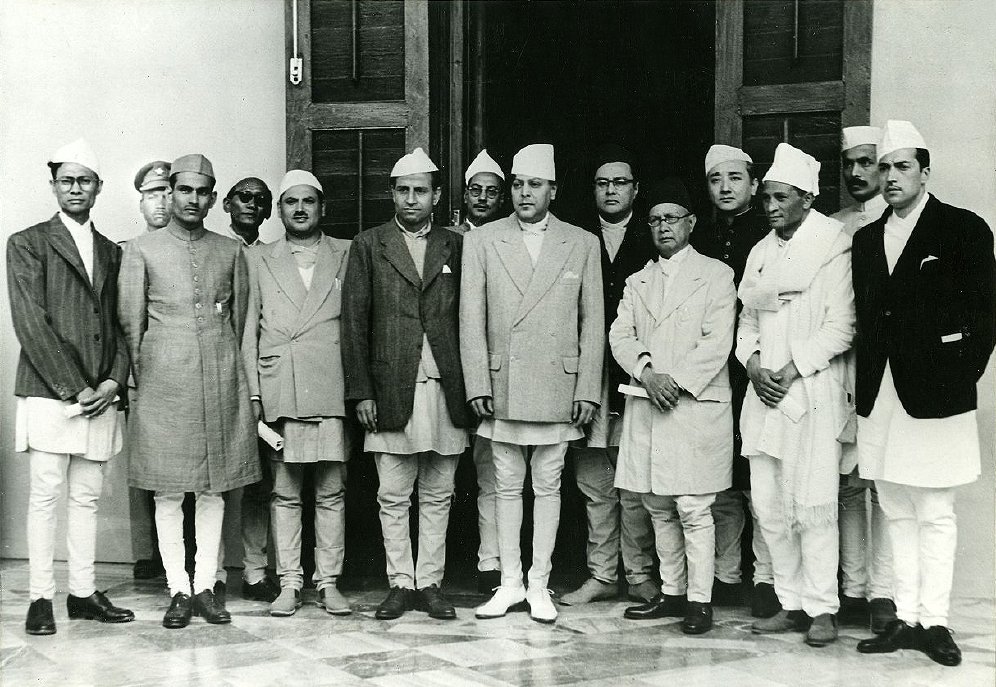
Formation of Nepali National Congress led by prominent leaders in history.
Calcutta, British India
 scale(5.56106)'%3e%3ccircle r='1'/%3e%3cg id='d'%3e%3cg id='c'%3e%3cpath id='b' d='M.195-.98 0-1.39l-.195.408' transform='rotate(11.25)'/%3e%3cuse xlink:href='%23b' transform='rotate(22.5)'/%3e%3cuse xlink:href='%23b' transform='rotate(45)'/%3e%3c/g%3e%3cuse xlink:href='%23c' transform='rotate(67.5)'/%3e%3c/g%3e%3cuse xlink:href='%23d' transform='scale(-1 1)'/%3e%3c/g%3e%3cg transform='translate(0 58.787) scale(8.1434)'%3e%3ccircle r='1'/%3e%3cg id='g'%3e%3cg id='f'%3e%3cpath id='e' d='M.259.966 0 1.576l-.259-.61'/%3e%3cuse xlink:href='%23e' transform='rotate(180)'/%3e%3c/g%3e%3cuse xlink:href='%23f' transform='rotate(90)'/%3e%3c/g%3e%3cuse xlink:href='%23g' transform='rotate(30)'/%3e%3cuse xlink:href='%23g' transform='rotate(60)'/%3e%3c/g%3e%3c/g%3e%3c/svg%3e)
Political
10 min read
Updated By: History Editorial Network (HEN)
Published:
Updated:
The Nepali National Congress was established on 25/01/1947 in Calcutta, British India, during a period when Nepal was governed by the Rana dynasty’s hereditary prime minister system. The organization was formed to coordinate political resistance against Rana rule and advocate for democratic governance in Nepal. Many Nepali political activists had been operating from India due to restrictions on political activity inside Nepal at the time. The founding of the party brought together intellectuals, activists, and exiled political leaders seeking constitutional reform and civil liberties.
Among the prominent leaders associated with the founding were Bishweshwar Prasad Koirala, commonly known as B.P. Koirala, Dilli Raman Regmi, Matrika Prasad Koirala, and Ganesh Man Singh. B.P. Koirala became one of the most recognized figures of Nepal’s democratic movement and later served as the country’s first democratically elected prime minister in 1959. Other future national leaders, including Krishna Prasad Bhattarai and Mahendra Narayan Nidhi, also became closely connected with the organization’s activities and broader democratic campaign.
The party’s principal objective was the removal of the Rana autocracy, which had dominated Nepalese governance since 1846. The Rana system centralized political power within a hereditary ruling family while limiting the authority of the monarchy and restricting political freedoms. Through organizing political activism, public outreach, and resistance campaigns, the Nepali National Congress became one of the central forces challenging Rana rule during the late 1940s.
A major development occurred on 09/04/1950 when the Nepali National Congress merged with the Nepal Democratic Congress, an organization led by Subarna Shamsher Rana. The merger created the Nepali Congress Party, which later became one of Nepal’s leading democratic political parties. The unified organization played a direct role in the anti Rana movement that contributed to the political changes of 1951, when the Rana regime lost its exclusive hold on power and Nepal began transitioning toward constitutional governance.
Historical Significance:
The formation of the Nepali National Congress marked the beginning of an organized nationwide democratic political movement led by Nepali activists rather than isolated regional opposition. Its later merger into the Nepali Congress established a political institution that continued to shape Nepal’s parliamentary politics, democratic reforms, and constitutional debates throughout the second half of the twentieth century.
Insights and Summary:
In the mid-20th century, a pivotal political development unfolded in Nepal with the formation of the Nepali National Congress, spearheaded by key figures such as BP Koirala, Matrika Prasad Koirala, and Ganesh Man Singh. This moment marked a critical juncture in Nepal’s political history as it laid the foundation for organized resistance against the autocratic Rana regime, which had held power in Nepal for over a century.
Before this development, Nepal was under the tight grip of the Rana oligarchy, which exercised absolute control over the administration, relegating the monarchy to a ceremonial role. The political environment was heavily repressive, stifling any form of dissent or political organization. However, inspired by the wave of democratic movements sweeping across the Indian subcontinent, a cohort of Nepali political activists found the courage to mobilize and challenge the status quo.
The primary objectives of the Nepali National Congress were to end autocratic rule and establish a democratic political system. The formation of the party galvanized the nascent democratic movement within Nepal, mobilizing citizens across various strata of society. It also marked a significant shift, as for the first time, there was a structured political entity advocating for systemic change.
BP Koirala, with his eloquence and political acumen, emerged as a formidable leader. Matrika Prasad Koirala's strategic insights and Ganesh Man Singh's organizational skills bolstered the party's efforts. Together, they infused new energy into the movement for democracy in Nepal.
The emergence of the Nepali National Congress had far-reaching impacts. It paved the way for the eventual fall of the Rana regime, significantly altering the political landscape of Nepal. The event is crucial not only for its immediate political ramifications but also for setting the stage for subsequent political developments, including the establishment of a parliamentary democracy.
#NepaliNationalCongress
#BPKoirala
#Democracy
#NepalHistory
#PoliticalChange
Primary Reference
Book: A Century Of Family Autocracy In Nepal (1950)

Explore the Life Moments of
 AI Twin