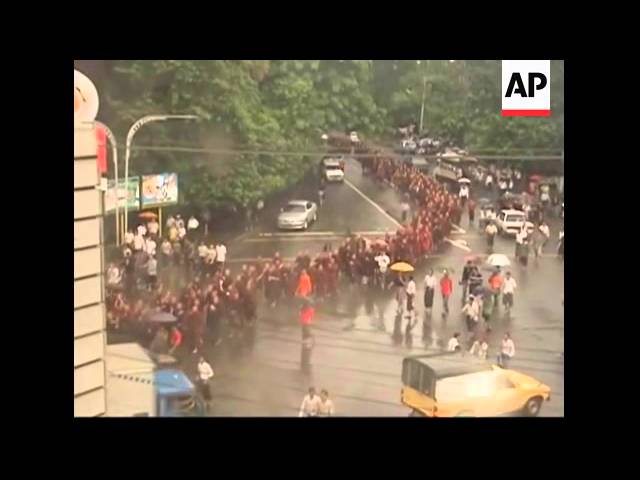
Protests by Buddhist Monks in Burma
Myanmar
3 min read
Updated By: History Editorial Network (HEN)
Published:
Updated:
In Burma, a series of protests led by thousands of Buddhist monks emerged as a response to the political and economic situation in the country. The movement, characterized by its non-violent approach, began on 18 September and quickly gained momentum, drawing attention both locally and internationally. The monks, who are highly respected in Burmese society, played a crucial role in mobilizing public sentiment against the military government. Their involvement highlighted the deep-rooted frustrations among the populace regarding rising fuel prices and the overall lack of democratic freedoms. The protests were marked by peaceful marches and gatherings, particularly at significant religious sites such as the Shwedagon Pagoda, which served as a focal point for the demonstrations.
However, the peaceful protests faced a severe crackdown by the government on 26 September. This response included the deployment of military forces to disperse the crowds, leading to violent confrontations. The government's actions drew widespread condemnation from various human rights organizations and foreign governments, emphasizing the need for political reform in Burma. The protests not only underscored the monks' influence in Burmese society but also sparked a broader discussion on human rights and democracy in the region, impacting international perceptions and policies towards the military regime.
#mooflife
#MomentOfLife
#BuddhistMonks
#BurmaProtests
#Non-violenceMovement
#HumanRights
#PoliticalReform

Explore the Life Moments of
 AI Twin