Myanmar’s 2025–26 General Election: Final Results Confirm Landslide Win for Military-Backed USDP
Myanmar

Political
Military
7 min read
Updated By: History Editorial Network (HEN)
Published:
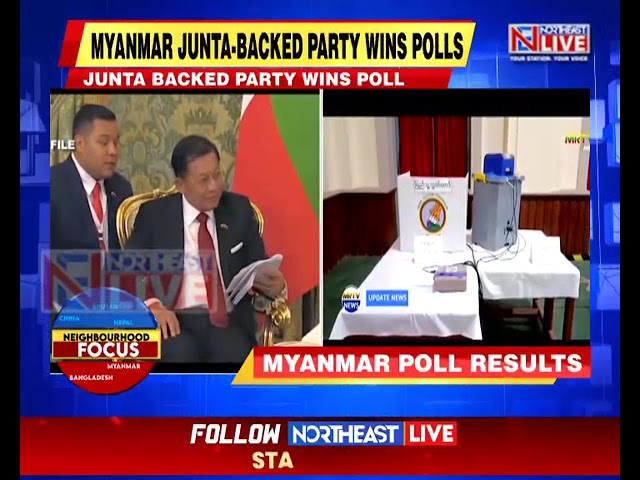
On 30-Jan-2026, Myanmar’s junta-run 2025–26 general election culminated in a landslide victory for the military-backed Union Solidarity and Development Party (USDP), with official tallies released after a phased vote conducted amid civil war, cancellations in conflict areas, and broad restrictions on political participation.
Myanmar state media and official results from the junta-appointed election authorities reported that the Union Solidarity and Development Party dominated all phases of the national vote and secured an overwhelming majority of seats announced across the two national legislative chambers.
Election structure and timeline:
The election was held in three phases because of security conditions: 28-Dec-2025, 11-Jan-2026, and 25-Jan-2026.
Voting did not take place in 67 townships (mostly areas controlled by armed opposition groups), which reduced the number of seats in the national parliament from 664 to 586, according to AP reporting.
Reuters reported turnout around ~55% in each round, substantially lower than in Myanmar’s 2015 and 2020 general elections (about ~70%).
Results and numbers that matter:
• Reuters reported the USDP secured 232 of 263 seats “up for grabs” in the Pyithu Hluttaw (lower house) and 109 of 157 seats “announced so far” in the Amyotha Hluttaw (upper house) as results were released on Thursday and Friday around the final announcement.
• Under Myanmar’s political system, 25% of parliamentary seats are reserved for the military, meaning the armed forces retain substantial institutional power regardless of the party outcome.
Political context and participation limits:
• This was Myanmar’s first national election since the 2021 military coup that removed the elected government led by Aung San Suu Kyi. Her party, the National League for Democracy, was among those dissolved, and major opposition forces did not contest the vote.
• Reuters also reported that, using an “election protection law,” authorities charged more than 400 people for criticizing or obstructing the election process (as reported by state media).
Conflict conditions, exclusions, and reported election-period harm:
• The vote unfolded during ongoing nationwide conflict, with the UN reporting large segments of the population excluded from voting-including groups such as the Rohingya (often due to lack of citizenship) and people displaced outside the country.
• Reuters further reported the UN human rights office had verified at least 170 civilian deaths from airstrikes during the election period and about 400 arrests (as of its reporting).
What followed (immediate next steps):
• According to Reuters, Myanmar’s parliament was expected to convene in March 2026 to elect a president, with a new government expected to take over in April 2026, citing pro-military media and the junta spokesperson.
• AP separately reported that after results are finalized, lawmakers and military appointees propose candidates, and the parliament elects a president and vice presidents; it also noted junta leader Min Aung Hlaing was widely expected to assume the presidency.
International reaction:
Regional and international actors criticized the process: the Association of Southeast Asian Nations said it would not endorse the election, while Reuters reported denouncements by human rights groups and some Western governments; the U.S. State Department said it was monitoring next steps.
#election

Explore the Life Moments of
 AI Twin