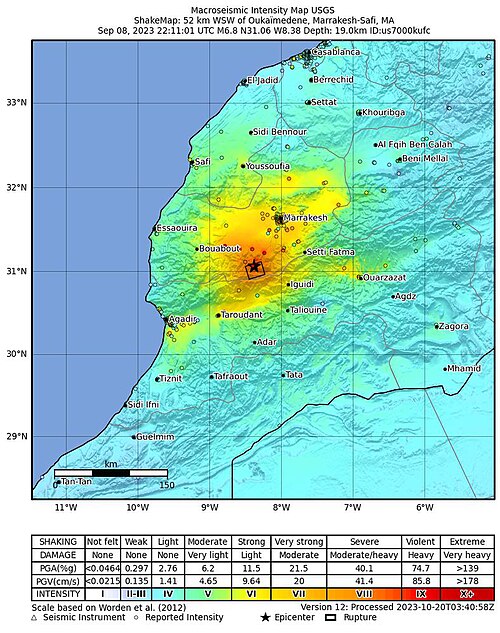
Magnitude 6.8 Al Haouz earthquake strikes, killing nearly 3,000 people
4 min read
Updated By: History Editorial Network (HEN)
Published:
A magnitude 6.8 earthquake struck the Al Haouz region, causing widespread devastation and claiming nearly 3,000 lives. The tremor, one of the strongest in the area in recent decades, leveled homes, schools, and public infrastructure, while triggering landslides and severe damage to roads and bridges. Rescue teams, military personnel, and emergency responders were immediately deployed to search for survivors, provide medical care, and deliver food, water, and shelter to displaced residents. Many communities were cut off due to damaged transportation networks, complicating relief efforts and prompting urgent appeals for national and international assistance.
The earthquake’s impact carries significant humanitarian, social, and economic consequences. Humanitarian concerns are acute, as thousands of survivors face injuries, homelessness, and shortages of essential services, while families mourn the loss of loved ones. Economically, the disaster has caused extensive property and infrastructure damage, threatening livelihoods, disrupting local markets, and requiring substantial resources for reconstruction. Socially, the tragedy underscores the vulnerability of communities to natural disasters and highlights the importance of early warning systems, disaster preparedness, and resilient construction practices. International agencies and neighboring countries have pledged aid, emphasizing the urgent need for coordinated relief and long-term recovery measures. Overall, the Al Haouz earthquake represents a major natural disaster with profound human and economic costs, reinforcing the need for improved disaster management and resilience strategies.
Primary Reference
2023 Al Haouz earthquake

Explore the Life Moments of
 AI Twin