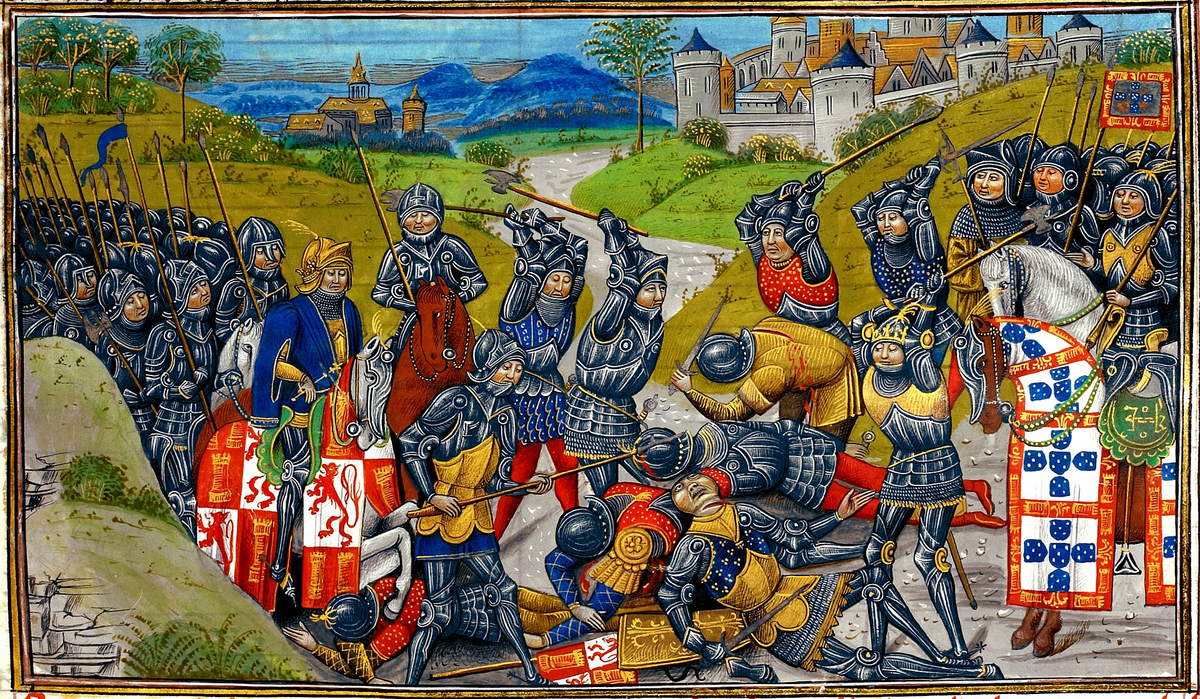
Decisive Victory: Battle of Aljubarrota
Political
4 min read
Updated By: History Editorial Network (HEN)
Published:
The Battle of Aljubarrota was a pivotal conflict in the Iberian Peninsula where Portuguese and Moroccan forces clashed. The backdrop of the battle was the ongoing dispute over the Portuguese crown, with the Kingdom of Castile supporting one claimant and the Kingdom of Portugal backing another. Seeking to assert dominance, the King of Portugal, with his ally England, faced off against the Castilian-Moroccan coalition.
The Portuguese army, under the leadership of King John I, strategically positioned themselves on high ground, utilizing their knowledge of the terrain to their advantage. In a bold move, they engaged the enemy, utilizing innovative tactics that included the use of long-range weapons and flanking maneuvers. The Moroccan cavalry, known for their prowess in battle, were unable to penetrate the Portuguese defenses, leading to a decisive victory for the Portuguese.
The aftermath of the Battle of Aljubarrota was profound. The Portuguese secured their independence and established themselves as a significant power in the region, solidifying the House of Aviz on the throne. The defeat dealt a severe blow to the ambitions of the Castilian-Moroccan alliance, altering the political landscape of the Iberian Peninsula. The battle marked a turning point in the history of Portugal, shaping its future as an independent nation.
The legacy of the Battle of Aljubarrota endures, symbolizing the resilience and determination of the Portuguese people in the face of adversity. It stands as a testament to strategic thinking, military prowess, and the will to defend one's sovereignty. The battle remains a historical touchstone, commemorating the bravery and sacrifice of those who fought to secure Portugal's independence.
#BattleofAljubarrota #PortugueseIndependence #CastilianMoroccanConflict
Primary Reference
Battle of Aljubarrota | Portugal [1385] | Britannica

Explore the Life Moments of
 AI Twin