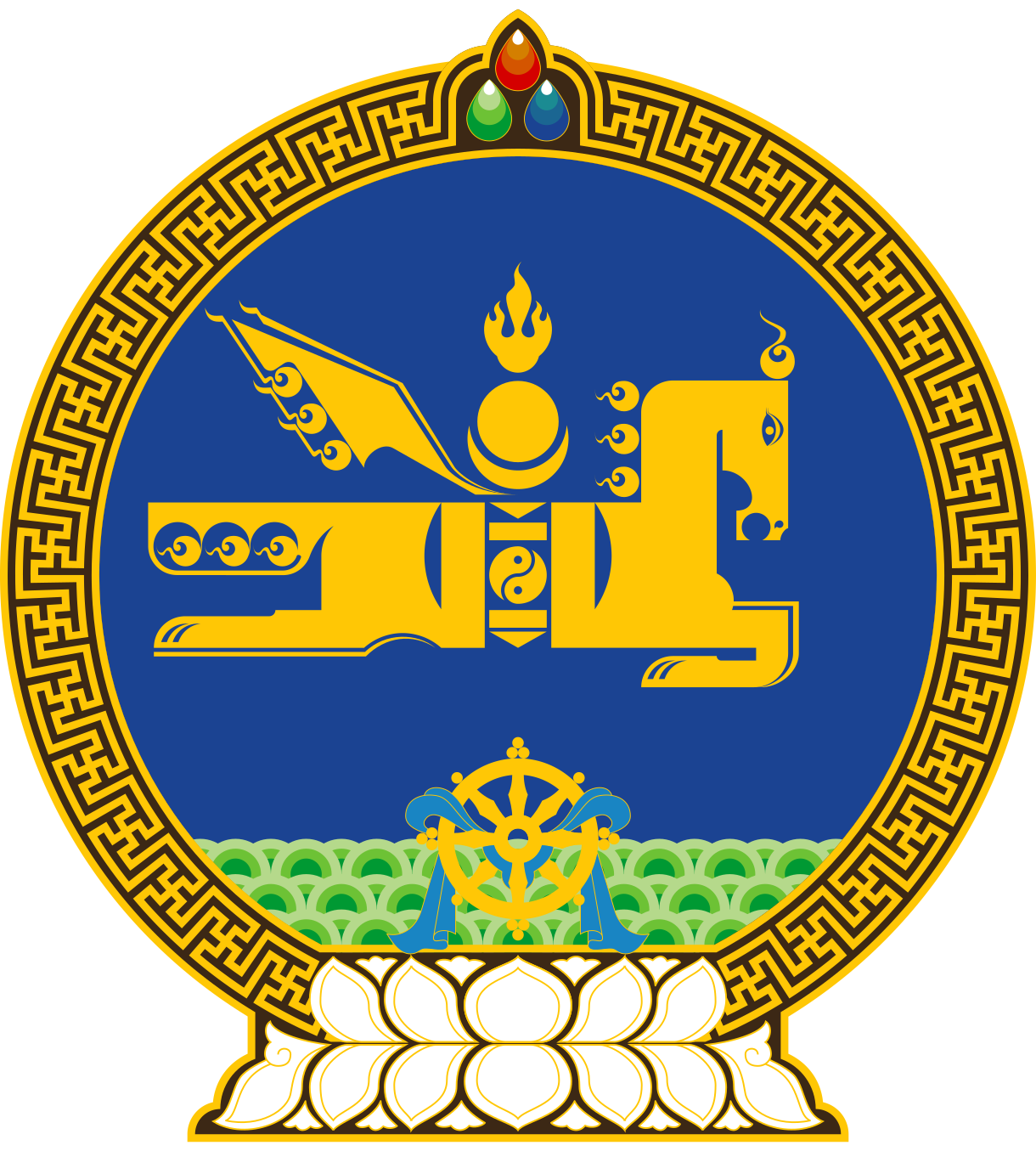
Transition to Parliamentary Republic: Mongolia Adopts New Constitution
Mongolia

Political
Economic Downturn
6 min read
Updated By: History Editorial Network (HEN)
Published:
Mongolia adopted a new constitution, marking a pivotal transition from a single-party socialist state to a parliamentary republic. This development occurred amid a wave of democratic changes sweeping through Eastern Europe and Asia. Before this, Mongolia was under the Soviet sphere of influence for much of the 20th century, with a political system rooted in Marxist-Leninist ideology.
The move towards a parliamentary republic began with the pro-democracy movement, which gained momentum as the Soviet Union experienced its own internal reforms. Public discontent with the existing regime and the desire for greater political liberties and economic reforms fueled the push towards a new governance structure. Demonstrations and discussions among intellectuals, students, and reformist political leaders intensified, leading to the decision to draft a new constitution.
The newly established constitution laid the framework for a multi-party political system and introduced significant changes. It dismantled the one-party rule and established a unicameral legislature known as the State Great Khural. This body would be responsible for electing the President and Prime Minister, ensuring a separation of powers. Additionally, the constitution enshrined civil liberties, such as freedom of speech, assembly, and religion, which were previously restricted under the socialist regime.
Economically, the transition aimed to shift from a command economy to a more market-oriented system. This required substantial reforms in property ownership, privatization of state-owned enterprises, and the introduction of new laws to facilitate private business operations. These changes were aimed at improving economic conditions and integrating Mongolia into the global market.
The adoption of the new constitution had a profound impact on Mongolia's political and socio-economic landscape. Politically, it resulted in a vibrant multi-party system, with regular elections and peaceful transfers of power. Economically, while the country faced challenges typical of transitional economies, such as inflation and unemployment, the reforms paved the way for increased foreign investment and growth in various sectors.
The transition to a parliamentary republic represented Mongolia's commitment to democratic principles and human rights, aligning it closer to international democratic norms. Over time, these reforms contributed to the stabilization and modernization of the nation's political infrastructure.
#MongolianPolitics #DemocraticReform #ParliamentaryRepublic #EvolvingEconomy #MoofLife
Primary Reference
Mongolia - The World Factbook

Explore the Life Moments of
 AI Twin