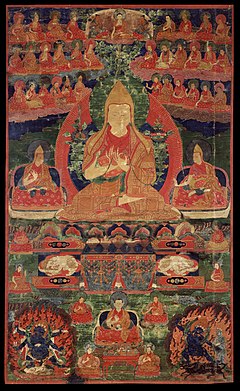
Introduction of Gelug Tibetan Buddhism in Mongolia
Mongolia

Religious
CulturalShift
5 min read
Updated By: History Editorial Network (HEN)
Published:
The introduction of the Gelug school of Tibetan Buddhism to Mongolia marked a pivotal transformation in Mongolian history. Before this religious shift, Mongolia was predominantly influenced by shamanistic practices, which were deeply ingrained in the nomadic culture. The arrival of the Gelug school, founded by Je Tsongkhapa, signified a significant shift in religious adherence and societal norms.
The pivotal dissemination of this Buddhist tradition was facilitated by Zanabazar, a revered figure and the first Jebtsundamba Khutuktu, who was instrumental in adopting Gelug teachings. His efforts were crucial in establishing strong religious and political ties between Mongolia and Tibet. The Mongolian aristocracy, particularly the powerful Khalkha Mongols, embraced this new spiritual direction. This alignment brought about not only religious transformation but also a consolidation of power, as the Gelug school provided a theological foundation that supported the socio-political structure.
The Gelug school's influence manifested in various ways, including the establishment of numerous monasteries across Mongolia. These monasteries became centers of education and spiritual practice, attracting monks and scholars dedicated to Buddhist teachings. This educational emphasis contributed to a scholarly renaissance in Mongolia, underpinned by Buddhist philosophy and ethics.
The impact of adopting the Gelug tradition went beyond religion; it also played a crucial role in shaping Mongolian identity and diplomacy. The alignment with a Buddhist school fostered closer ties with other Buddhist regions, particularly Tibet and China, influencing trade, culture, and political alliances. It also sparked a wave of cultural synthesis, integrating Tibetan Buddhist architectural styles and art forms into Mongolian culture.
The widespread adoption of the Gelug tradition among the Mongolian populace led to lasting changes in the spiritual and cultural fabric of the nation. Today, the enduring presence of Gelug monasteries and the continued reverence for figures like Zanabazar underscore the lasting legacy of this transformative period.
#GelugBuddhism #MongolianHistory #ReligiousTransformation #CulturalShift #BuddhismInMongolia #MoofLife
Primary Reference
Gelug - Wikipedia

Explore the Life Moments of
 AI Twin