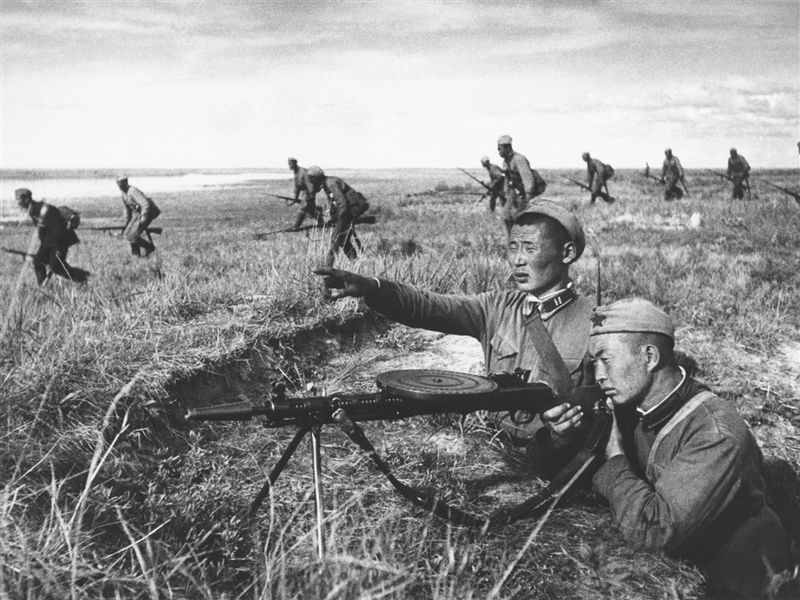
China recognizes Mongolia's independence after World War II.
Mongolia

Political
6 min read
Updated By: History Editorial Network (HEN)
Published:
Following the conclusion of World War II, a notable development in international relations took place involving Mongolia. During the wartime conferences, major world powers discussed the future political landscape, which included the status of various territories. Mongolia, situated between the Soviet Union and China, had long sought official recognition of its independence, a status it had declared decades prior but had not fully secured diplomatic acknowledgment.
At that time, Ulaanbaatar had been functioning as the capital of the Mongolian People's Republic, operating largely under Soviet influence since the early 1920s. However, the geopolitical dynamics of the post-war period provided an opportunity for Mongolia to solidify its sovereignty in the eyes of neighboring China. The Chinese Civil War and the changing tides of international diplomacy necessitated clearer definitions of state boundaries and governance.
The Soviet Union played a crucial role by leveraging its influence over China to facilitate an agreement. The Yalta Conference, which brought together leaders from the Allied powers, addressed various territorial issues, including the status of Mongolia. An accord was reached whereby China agreed to recognize Mongolia's independence as part of broader negotiations and mutual concessions involving other territorial disputes and political alignments in East Asia.
The impact of this recognition was multifaceted. For Mongolia, it meant a formal affirmation of its status as a sovereign state, opening pathways to international diplomacy and economic interactions that were free from the ambiguity that had previously hampered its global standing. For China, this move was part of a larger strategy to secure Soviet cooperation and support during a turbulent period of internal conflict and reconstruction.
This diplomatic recognition had lasting consequences, elevating Mongolia's international profile and allowing it to join various international organizations as a recognized independent nation. It also influenced regional politics, contributing to the strategic balance during the early Cold War period. The acknowledgment set a precedent for other regions and states grappling with similar issues of sovereignty and recognition in the post-war order.
The recognition of Mongolia's independence by China is a pivotal chapter in the nation's history, highlighting the complex interplay of global politics and the struggle for national self-determination. This event underscores the significant shifts in diplomatic relationships in the aftermath of a global conflict.
#MoofLife #MongolianIndependence #PostWWIIDiplomacy #Sovereignty #InternationalRelations
Primary Reference
1945 Mongolian independence referendum - Wikipedia

Explore the Life Moments of
 AI Twin