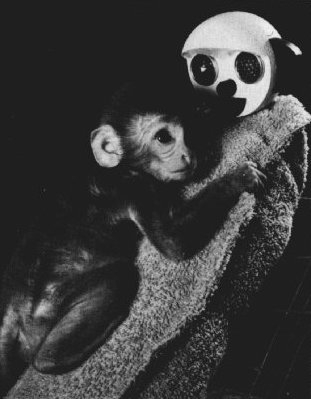
Harry Harlow's experiments with rhesus monkeys
Psychology
Animal Behavior
Research
3 min read
Updated By: History Editorial Network (HEN)
Published:
Updated:
Harry Harlow's experiments with rhesus monkeys focused on understanding the effects of maternal separation and social isolation. Harlow's research revealed that infant monkeys preferred a soft, comforting surrogate mother over a wire mother that provided food. This finding highlighted the importance of emotional bonds and attachment in early development, suggesting that love and comfort are critical for healthy psychological growth. Harlow's work contributed to the understanding of attachment theory, influencing both psychology and child development practices. His experiments demonstrated that social and emotional needs are as vital as physical needs in the development of young primates, which has implications for human parenting and caregiving practices.
Albert Bandura's Bobo doll experiment examined the role of observational learning in children's behavior. In this study, children observed adults interacting aggressively with a Bobo doll and subsequently imitated this behavior when given the opportunity. Bandura's findings indicated that behavior can be learned through observation and imitation, rather than solely through direct reinforcement. This research has had a profound impact on the fields of psychology and education, emphasizing the importance of role models and the influence of media on behavior. Bandura's work laid the groundwork for social learning theory, which has been applied in various contexts, including behavioral therapy and educational strategies.
#mooflife
#MomentOfLife
#Harlow'sRhesusMonkeyExperiments
#AttachmentTheory
#BoboDollExperiment
#ObservationalLearning
#ChildDevelopment
Primary Reference
Harry Harlow

Explore the Life Moments of
 AI Twin