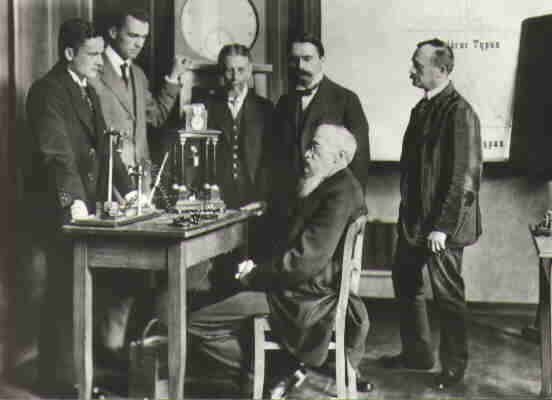
Wilhelm Wundt establishes first experimental psychology lab
Psychology
History of Psychology
Experimental Psychology
4 min read
Updated By: History Editorial Network (HEN)
Published:
Wilhelm Wundt established the first experimental psychology laboratory in Leipzig, Germany, marking a pivotal moment in the field of psychology. This laboratory was dedicated to the systematic study of the mind, employing experimental methods to investigate psychological phenomena. Wundt's approach emphasized the importance of empirical research and the use of controlled experiments to understand mental processes. His work laid the foundation for psychology as a distinct scientific discipline, separating it from philosophy and physiology. Wundt's laboratory attracted numerous students and researchers, fostering a new generation of psychologists who would further develop the field. The establishment of this lab is often regarded as the beginning of psychology as an experimental and scientific discipline, influencing future research methodologies and theoretical frameworks in psychology.
The impact of Wundt's laboratory extended beyond Germany, as it inspired the establishment of similar institutions worldwide. For instance, G. Stanley Hall opened the first experimental psychology lab in the United States at Johns Hopkins University shortly after Wundt's initiative. This proliferation of experimental psychology labs contributed to the growth of psychology as a profession and academic discipline. Wundt's emphasis on introspection and the study of consciousness also led to the development of various psychological theories and schools of thought, including structuralism. His contributions to psychology are recognized as foundational, and his laboratory remains a significant milestone in the history of psychological research.
#mooflife
#MomentOfLife
#WilhelmWundt
#ExperimentalPsychology
#PsychologyLab
#HistoryOfPsychology
#PsychologicalResearch

Explore the Life Moments of
 AI Twin