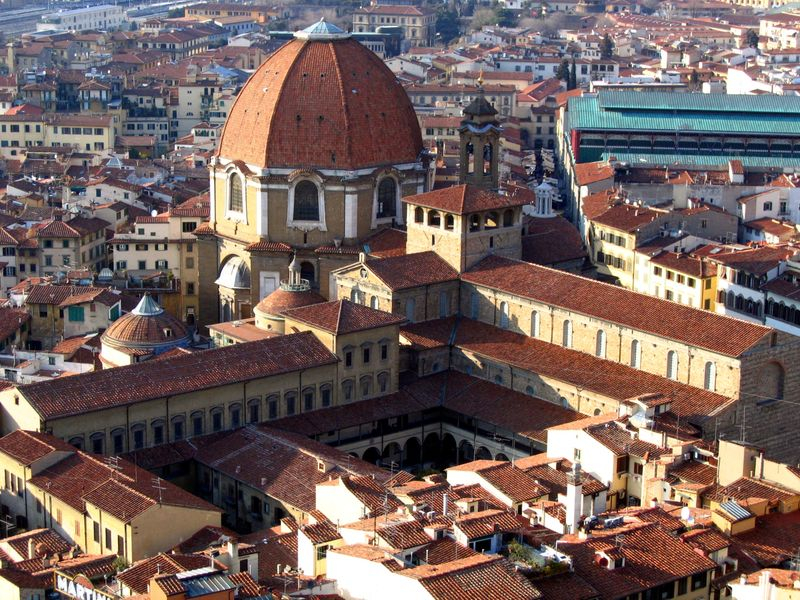
Michelangelo's Renaissance masterpiece: The Laurentian Library at San Lorenzo's Church
Italy
Art
4 min read
Updated By: History Editorial Network (HEN)
Published:
Updated:
Michelangelo received an architectural commission from Pope Clement VII to design the Laurentian Library at San Lorenzo's Church. This commission allowed Michelangelo to further showcase his architectural prowess along with his expertise in sculpture and painting. The project was initiated to house the extensive library collection of the Medici family, creating a structure that could both protect and display the manuscripts.
The Laurentian Library was envisioned to be a crucial repository of knowledge and culture. Michelangelo’s innovative architectural solutions included the use of novel elements such as the elongated windows and the unique staircase leading to the library entrance. These design choices set new standards in Renaissance architecture, merging functionality with artistic elegance.
The Laurentian Library's design had implications beyond architecture. It reinforced the status of the Medici family as patrons of the arts and humanism. Additionally, it highlighted the supportive relationship between Pope Clement VII—born Giulio de' Medici—and Michelangelo. This project became a template for integrating classical architectural forms with Renaissance innovation.
Today, the Laurentian Library stands not just as a functional space but as a testament to Renaissance genius and intellectual endeavor. Michelangelo’s input in this project has been studied extensively for its architectural ingenuity and historical significance.
#Michelangelo #LaurentianLibrary #PopeClementVII #SanLorenzoChurch #MediciFamily #RenaissanceArchitecture #CulturalHeritage #LibraryDesign #ArchitecturalInnovation #MoofLife

Explore the Life Moments of
 AI Twin