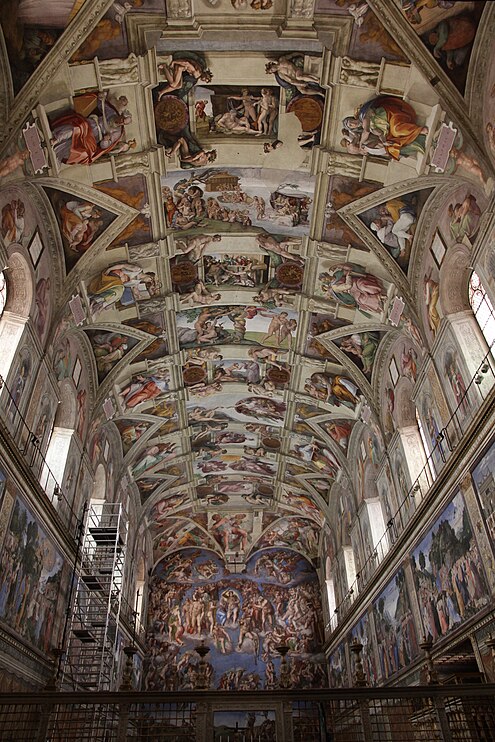
Michelangelo's Last Judgment: A Renaissance masterpiece depicting the Second Coming and final judgment.
Italy
Art Renaissance
3 min read
Updated By: History Editorial Network (HEN)
Published:
Updated:
Michelangelo, an Italian Renaissance artist, commenced the painting of The Last Judgment on the altar wall of the Sistine Chapel. Pope Clement VII commissioned the work, which covered over 40 square meters of the chapel's wall. This project came after Michelangelo's celebrated work on the chapel ceiling, showcasing his skills in fresco painting.
The Last Judgment depicts the Second Coming of Christ and the final judgment of souls, serving as a profound reflection on Catholic eschatology. Comprising more than 300 figures, the artwork is noted for its dynamic composition and the emotional intensity it portrays. It's a significant work not only in Michelangelo's career but also in the broader context of Renaissance art. The painting illustrated the theological concerns of the period, marking a shift toward more dramatic and expressive representations of religious themes.
This vast piece of art had a considerable impact on the religious and cultural landscape of the time. It exemplified the Renaissance’s dedication to blending art, religious devotion, and humanism. The Last Judgment also spurred discussions and controversies, especially regarding the portrayal of nudity in sacred art, leading to alterations and covering of some figures in later periods.
#ArtHistory #Renaissance #Michelangelo #SistineChapel #ReligiousArt #CulturalImpact #MoofLife
Explore the Life Moments of
 AI Twin