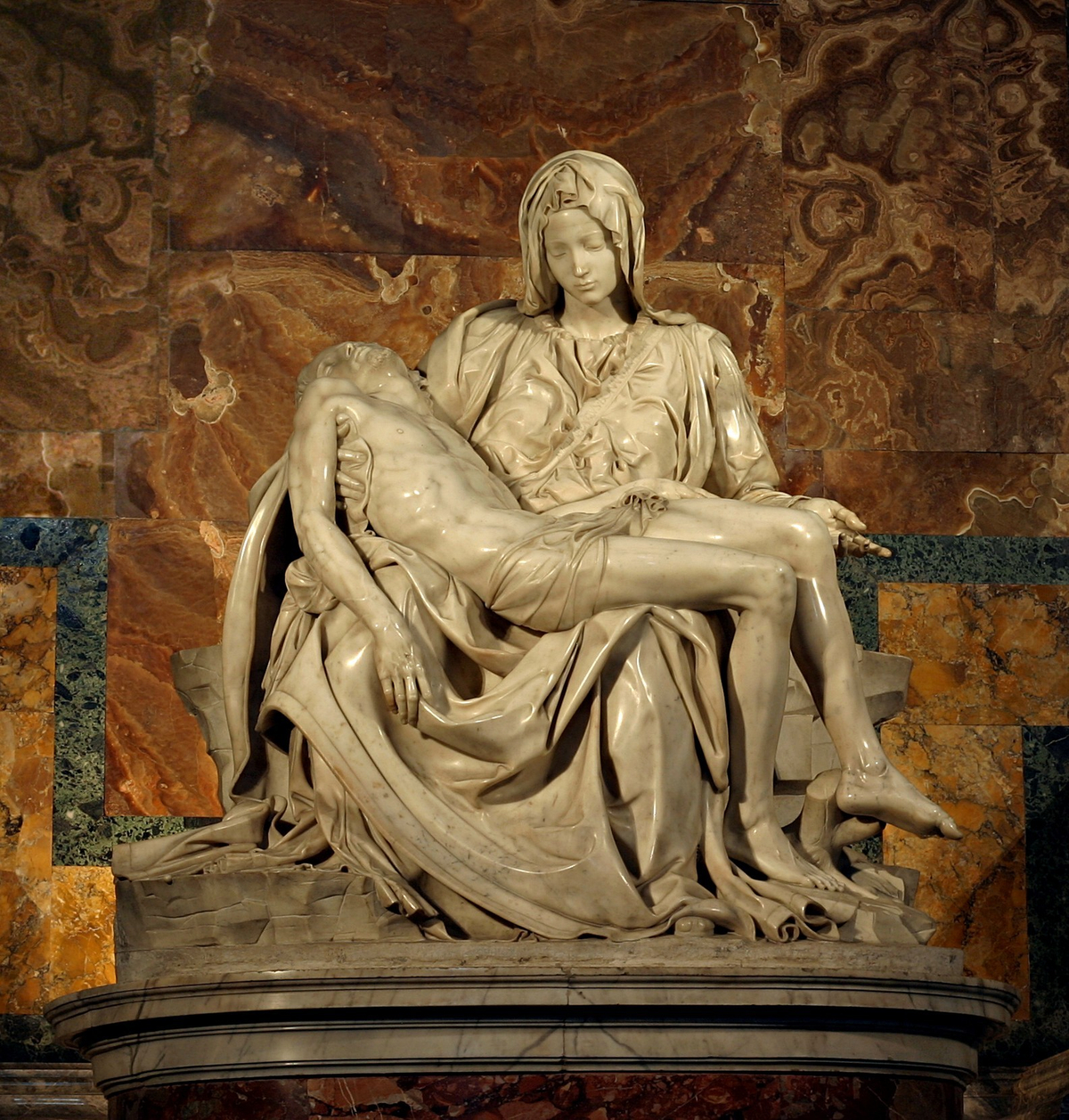
Michelangelo's Pietà: Renaissance masterpiece evokes emotion and elevates artistic skill, influencing generations to come.
Italy
Art Renaissance Art
3 min read
Updated By: History Editorial Network (HEN)
Published:
Updated:
Michelangelo, a young sculptor from Florence, completed the Pietà when he was in his early twenties. This marble sculpture, housed in St. Peter's Basilica in Vatican City, depicts the Virgin Mary holding the dead body of Jesus Christ after his crucifixion. The commissioned work immediately drew attention for its exquisite detail and emotional depth.
The sculpture showcased Michelangelo's exceptional skill in creating lifelike renditions of the human form from marble. His use of drapery, flesh, and anatomy was unprecedented. The high level of craftsmanship demonstrated in the Pietà elevated Michelangelo’s status as an artist. The sculptor’s ability to elicit profound emotion from a single block of marble marked a significant step in Renaissance art.
The Pietà became renowned not only for its artistic quality but also for its theological implications, providing a tangible representation of sorrow and compassion. This work contributed to the spread of Renaissance ideals, emphasizing the human experience in religious contexts. It remains one of the most studied and admired sculptures in art history, influencing future generations of artists.
The sculpture's public display in such a prominent location allowed it to be viewed by countless individuals over the years, adding to its fame and significance. #ArtHistory #Michelangelo #RenaissanceArt #VaticanCity #MoofLife
Explore the Life Moments of
 AI Twin