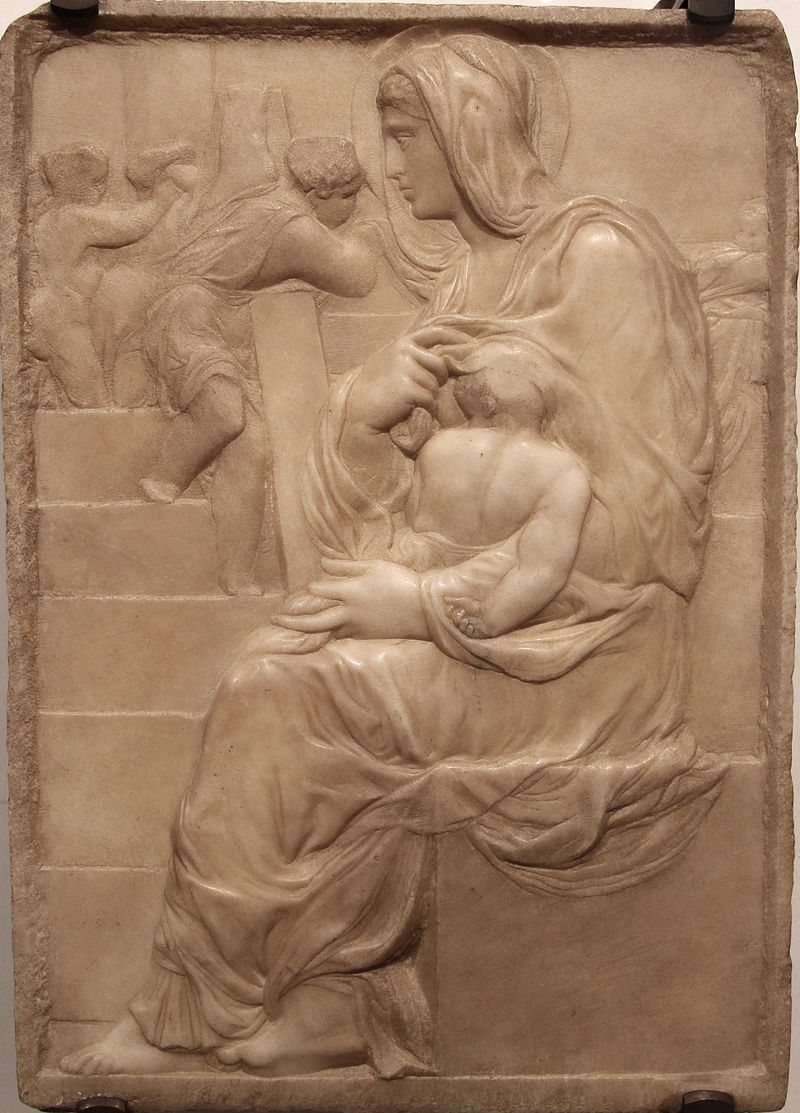
Michelangelo's 'Madonna of the Stairs': Youthful masterpiece foreshadows Renaissance genius.
Italy
Art
Renaissance
4 min read
Updated By: History Editorial Network (HEN)
Published:
Updated:
Michelangelo Buonarroti, an Italian sculptor, created his earliest known marble relief, 'Madonna of the Stairs,' during his teenage years. This piece was fashioned in the late 15th century, a period marked by the burgeoning Renaissance movement that emphasized the arts, humanism, and a resurgence of classical learning.
The relief depicts the Virgin Mary seated on a roughly hewn stair structure, with the Christ child standing beside her. This work is notable for its high level of detail and the delicate portrayal of the figures, showcasing Michelangelo's burgeoning skill and potential at a young age. It employs the rilievo schiacciato technique, a method characterized by extremely shallow carving to create subtle effects of light and shadow.
This early work is preserved in the Casa Buonarroti, a museum in Florence dedicated to the artist's legacy. The creation of 'Madonna of the Stairs' signifies Michelangelo's early dedication to exploring the human form and his ability to imbue marble with a profound sense of life and emotion.
Given its historical context, the demonstration of his early prowess had a significant influence on his future commissions and established him as a prodigious talent in the world of Renaissance art. Future patrons and artists recognized his capability, leading to numerous significant projects throughout his life, including monumental works like the Sistine Chapel ceiling and the statue of David.
#Michelangelo #EarlyWorks #RenaissanceArt #MadonnaOfTheStairs #ArtHistory #Florence #MoofLife

Explore the Life Moments of
 AI Twin