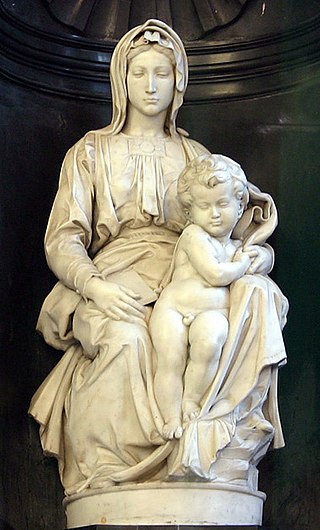
Michelangelo's 'Madonna of Bruges': Masterpiece of serenity and skillful marble sculpting.
Italy
Art
3 min read
Updated By: History Editorial Network (HEN)
Published:
Updated:
In Florence, Michelangelo completed his marble sculpture of the Virgin and Child, known as the 'Madonna of Bruges.' This work embodies the artist's skill in depicting serene and natural human forms, showcasing Mary holding the infant Jesus. Unlike earlier depictions, this sculpture places emphasis on the tender yet detached interaction between mother and child, reflecting a nuanced interpretation of their roles. Michelangelo's expertise in marble is evident in the smooth, lifelike texture he created.
The 'Madonna of Bruges' was commissioned by the influential Flemish merchant family, the Mouscrons, for a niche in the Church of Our Lady in Bruges. This acquisition by a foreign patron signified the growing international recognition and influence of Italian Renaissance artists. Measuring approximately 200 centimeters in height, the sculpture later traveled from Florence to its permanent home in Bruges, symbolizing a significant cultural exchange between Italy and the Low Countries.
Michelangelo's work on this sculpture contributed to his burgeoning reputation as a master sculptor. The piece’s delicate workmanship and the emotional expression captured in marble added to his acclaim. Over time, this sculpture has been studied and admired for its artistic innovation, becoming a treasured artifact of Renaissance art.
#MoofLife #Michelangelo #RenaissanceArt #Sculpture #MadonnaofBruges #CulturalExchange #VirginandChild
Explore the Life Moments of
 AI Twin