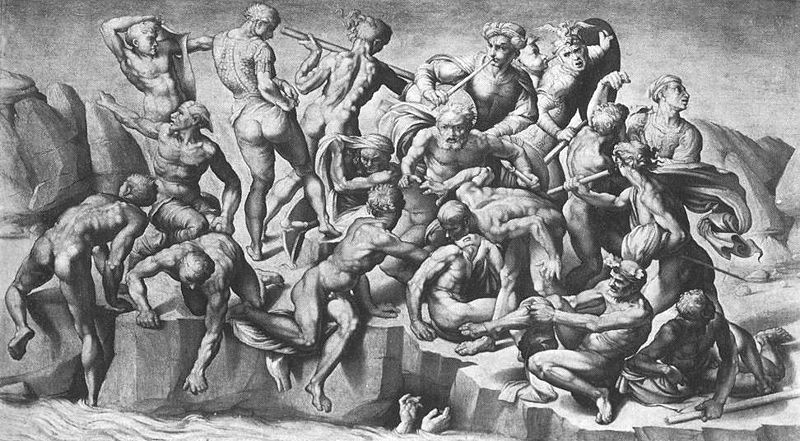
Michelangelo's Unfinished Cartoon: Battle of Cascina and Renaissance Art
Italy
Art
4 min read
Updated By: History Editorial Network (HEN)
Published:
Updated:
Michelangelo's engagement with the cartoon for the Battle of Cascina marked a significant chapter in Renaissance art, specifically during the early 16th century. This project was initiated as part of a series of artistic endeavors intended for the decoration of the Palazzo Vecchio in Florence. The Battle of Cascina was designed to celebrate the Florentine victory over Pisa, aiming to underscore martial prowess and civic pride.
The commission came from Piero Soderini, the Gonfaloniere of Florence, in a bid to enhance the city's political and cultural stature. Michelangelo, then a rising star in the artistic world, began working on the preliminary drawings—a technique known as a cartoon—that would serve as the foundation for the fresco.
Despite Michelangelo's dedication, the project remained incomplete. Various factors contributed to this, including political unrest, the immense scale of the work, and his involvement in other commissions. Notably, he ceased his work on the cartoon to undertake the creation of the David, further delaying progress.
The cartoon for the Battle of Cascina itself was a masterpiece of draftsmanship. It depicted a group of soldiers interrupted during a bath by an enemy attack. The intricate portrayal of human anatomy, dynamic movement, and expression showcased Michelangelo’s expertise and deepened his artistic impact, influencing contemporaries and future generations.
Though the fresco was never completed and the original cartoon is now lost, its remnants and copies by other artists have perpetuated its legacy. The work represents an important endeavor in Michelangelo's career, as well as in the broader narrative of Renaissance art, emphasizing the interplay of artistic ambition and political context.
#Michelangelo #BattleOfCascina #PalazzoVecchio #RenaissanceArt #FlorentineHistory #ArtisticLegacy #MoofLife
Explore the Life Moments of
 AI Twin