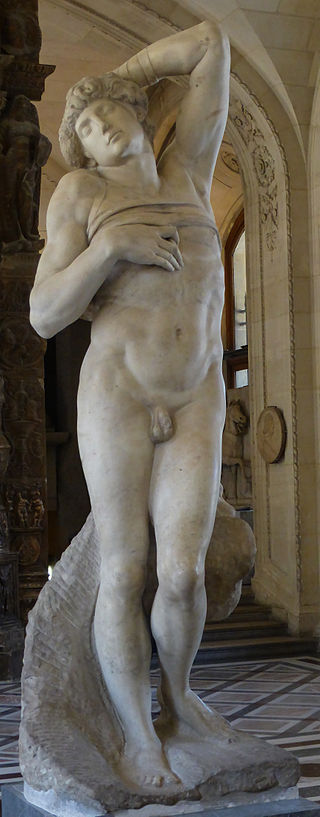
Michelangelo's 'Dying Slave' for Pope Julius II: Renaissance masterpiece showcasing artistic genius.
Italy
Art Renaissance
3 min read
Updated By: History Editorial Network (HEN)
Published:
Updated:
Pope Julius II commissioned Michelangelo Buonarroti to construct his tomb, a task that involved creating the 'Dying Slave' sculpture. This project was part of a grander vision for an elaborate mausoleum. The 'Dying Slave' portrays a young male figure in a lifelike manner, illustrating Michelangelo's mastery in depicting human anatomy and emotion. The sculpture was one component of a larger plan that included multiple figures and intricate designs.
It is crucial to recognize that Michelangelo crafted this piece during a period of flourishing artistic innovation in Italy, often referred to as the Renaissance. Michelangelo's work on the tomb coincided with other significant projects, such as his painting of the Sistine Chapel ceiling. The 'Dying Slave' is lauded for its realistic portrayal and is often studied in the context of Michelangelo's broader impact on Western art.
Over time, the sculpture became emblematic of Renaissance artistry, contributing to Michelangelo's enduring legacy as a pivotal figure in art history. The piece resides in the Louvre Museum, bearing testament to the artist's skill and the cultural richness of the period in which it was created.
#Michelangelo #Renaissance #ArtHistory #PopeJuliusII #DyingSlave #Sculpture #MoofLife
Explore the Life Moments of
 AI Twin