Michelangelo's Doni Tondo: Transition in Artistry and Patronage
Italy
Art
Renaissance
4 min read
Updated By: History Editorial Network (HEN)
Published:
Updated:
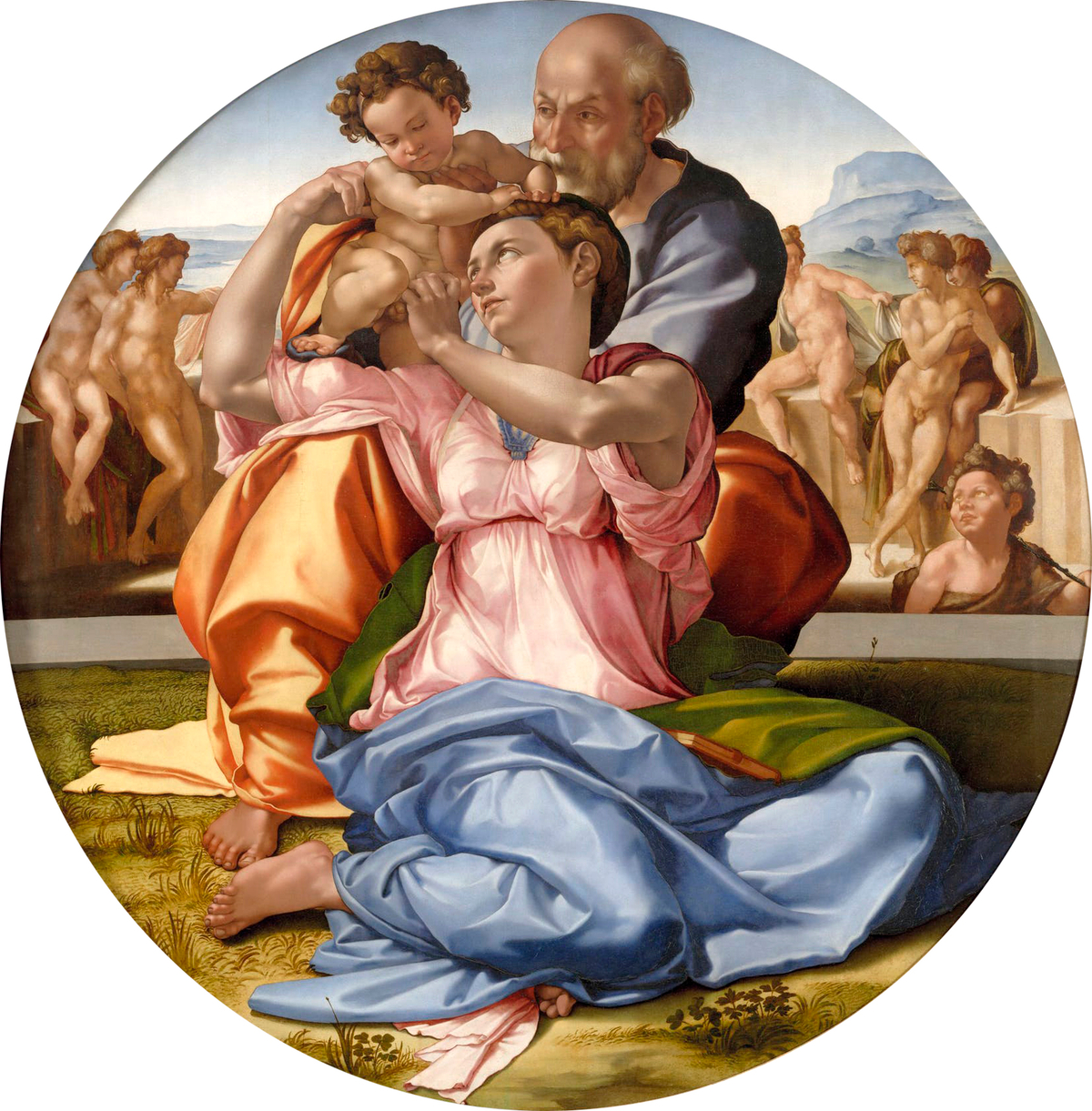
Michelangelo painted the Doni Tondo, a round-shaped depiction of the Holy Family, commissioned by Agnolo Doni and Maddalena Strozzi. The work was crafted during a period of transition for the artist, who was gaining recognition for his sculptural works, including the renowned David. The Doni Tondo is notable for its intricate composition and complex iconography, blending a serene depiction of Mary, Jesus, and Joseph with a vivid background that includes figures from Classical mythology.
The Doni Tondo highlights Michelangelo's mastery of form and his expertise in the use of vibrant color and intricate details, enhancing the visual impact. This work signifies his diversification into painting, as he was primarily celebrated for his sculptures. The commission by the affluent Doni family underscores Michelangelo’s expanding influence among the elite patrons of Florence, reflecting the high regard in which his artistic innovations were held.
This painting also foreshadowed Michelangelo's later work on the Sistine Chapel ceiling, showcasing his capabilities in addressing complex themes and large-scale compositions. The Doni Tondo remains a pivotal example of Renaissance art, emphasizing theological and humanistic themes through the medium of tempera on wood.
Michelangelo's Doni Tondo continues to be studied for its artistic merit and serves as a marker of the evolving trends in Renaissance art, blending devotional themes with an increasing focus on naturalism and human emotion. The work, housed in the Uffizi Gallery in Florence, remains an essential piece for understanding the breadth of Michelangelo's contributions to art and his role in shaping the visual language of the Renaissance.
#Michelangelo #RenaissanceArt #HolyFamily #DoniTondo #ArtHistory #UffiziGallery #MoofLife
Explore the Life Moments of
 AI Twin